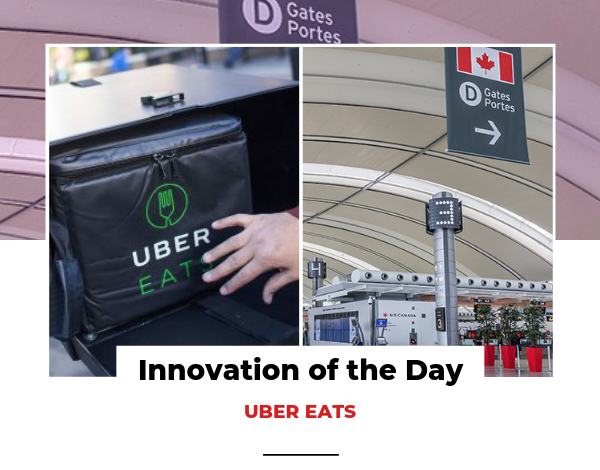
Passengers at Toronto Pearson airport will be able to order food and have it delivered to them at the gate. Launching in Q3 of this year, the pilot program is a joint collaboration between Toronto Pearson, the airport restaurant operator HMSHost and Uber Eats. Customers can order from a selection of restaurants including Caplansky's Deli, Paramount Fine Foods, Smoke's Burritorie, Smashburger or Fionn MacCools.
This isn’t the first time we’ve seen in-airport delivery. At Your Gate and Airport Sherpa have offered this kind of service for a couple of years. But this partnership captures a couple of powerful truths about digital innovation that are well worth considering:
Execution is everything. Spotting trends is the easy part. You don’t have to be a genius to spot that travelers won’t leave their expectations for on-demand delivery at the security check. But how you deliver (pun intended!) on that expectation will be the difference between success and failure. Creating a stand-alone delivery app isn’t especially hard. But is it really the answer? Ironically, for an innovation focused on convenience, the first use is more inconvenient: how many travelers will have or want to download the app? How many will want to enter their payment details?! This is why it makes total sense for Toronto Pearson and HMShost to partner with Uber Eats, an app that millions of travelers are already using.
Indeed this innovation is similar to what has been happening in Asia for years. Asian mobile behavior is more advanced thanks to the region’s richer and more expansive super-app ecosystem: WeChat in China, GoJek in Indonesia and Grab in South East Asia all offer a wide range of lifestyle services through their apps, from food to massages to finance.
So, with this in mind, two innovation questions for your next planning session:
Are you really catering to your consumers’ basic needs, or just jumping on a trend?
Is there an existing digital ecosystem you can leverage, rather than starting from scratch?