


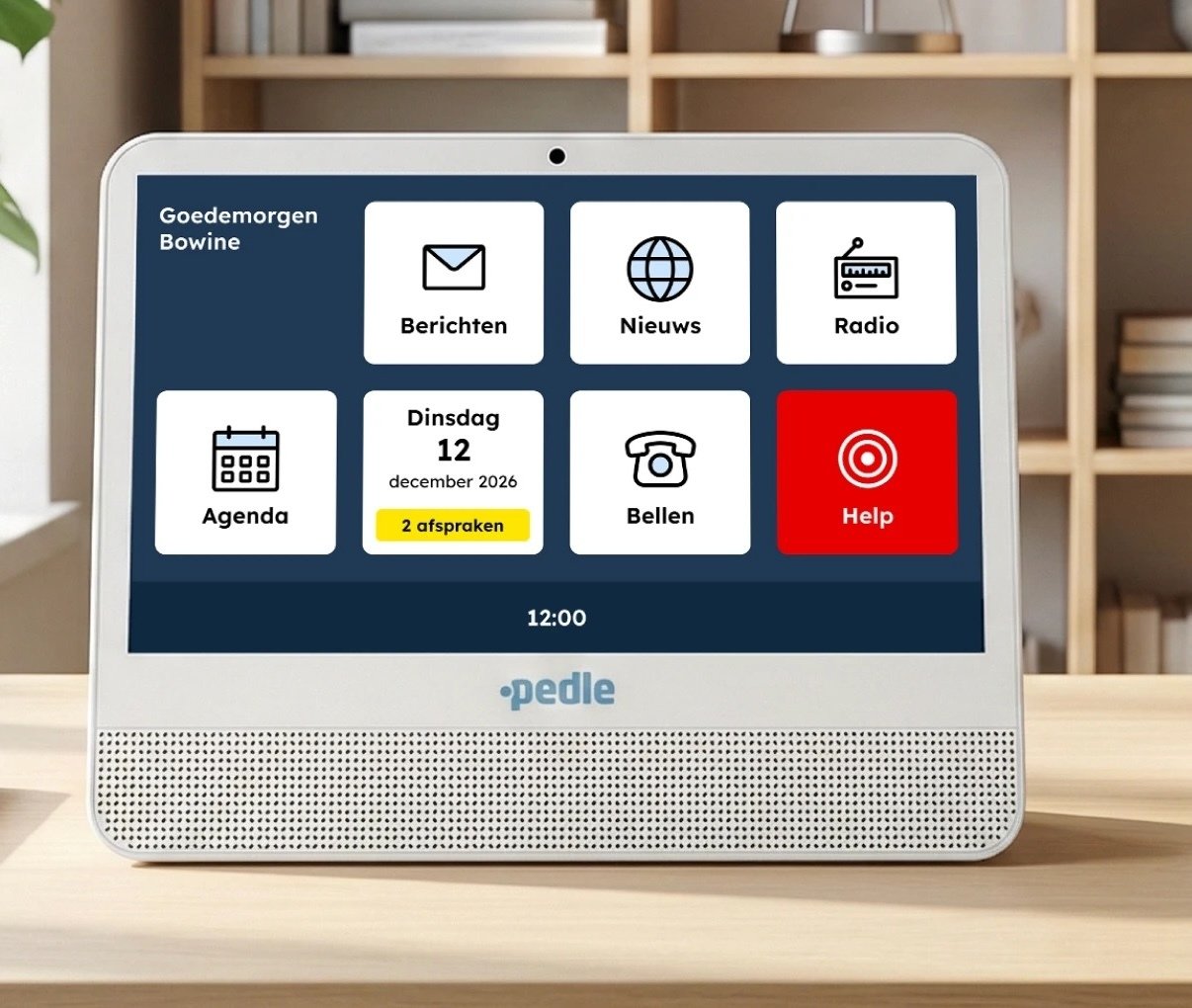
Most technology designed for older adults starts with a regular tablet and strips features away. Dutch startup Pedle took the opposite approach. Instead of simplifying a complex device, the company built a minimalist computer from scratch for people who find phones, tablets and laptops unworkable, whether due to age, cognitive impairment or mental health challenges.
The device handles video calling, messaging, news, radio, quizzes and photo sharing through a fixed interface that never changes. No system updates, no pop-ups. Family members and care staff manage everything remotely through a companion app, from adjusting the volume to adding items to a daily calendar. A closed contact system means strangers can't reach the user.
Pedle is currently available only through care organizations in the Netherlands, where it's used in elderly care, disability services, mental health facilities and sheltered housing. The platform connects with existing care infrastructure (calendars, client systems, meal services, even home automation) via a back-office portal and REST API. A home version is in the works.
TREND BITE
While internet usage numbers for adults over 65 have shown a steady increase over the past decades, that growth doesn't capture a sublter problem than pure access: many older adults who are technically "online" struggle with the devices that connect them. For those experiencing cognitive decline, even simplified interfaces can become unusable.
Pedle shares the case of a woman in her early eighties with progressive dementia whose husband suddenly fell ill. Unable to process what was happening or call for help, she walked to her Pedle and pressed her daughter's photo. The video call connected automatically, and her daughter contacted emergency services. For the elderly woman, there were no menus to navigate, nothing to unlock, no searching — just one recognizable image and a single tap.
The industry's usual answer to digital exclusion among older adults has been senior-friendly tablets with bigger icons and simpler menus. But when cognition itself is the barrier, the interface needs to work at the level of instinct, not instruction. It's a design principle that bridges the gap between "technically accessible" and "actually usable."




.png)