


A Dutch industrial designer is piloting an agricultural method that replaces rectangular fields with circular growing areas worked by a rotating robotic arm instead of tractors. The arm, fixed at the center of a 30-meter circle, slowly moves around the field while pulling existing agricultural tools for weeding, irrigation and harvesting. Circle Farming's design eliminates the need for tractor tracks, creating spaces between circles where nature and humans can flourish — places for wildflowers to grow, insects to forage and people to rest or even live. The method combines strip farming and precision farming, with each "line" in a circular field devoted to a different crop, forming a tight grid from above and a biodiverse landscape at ground level.
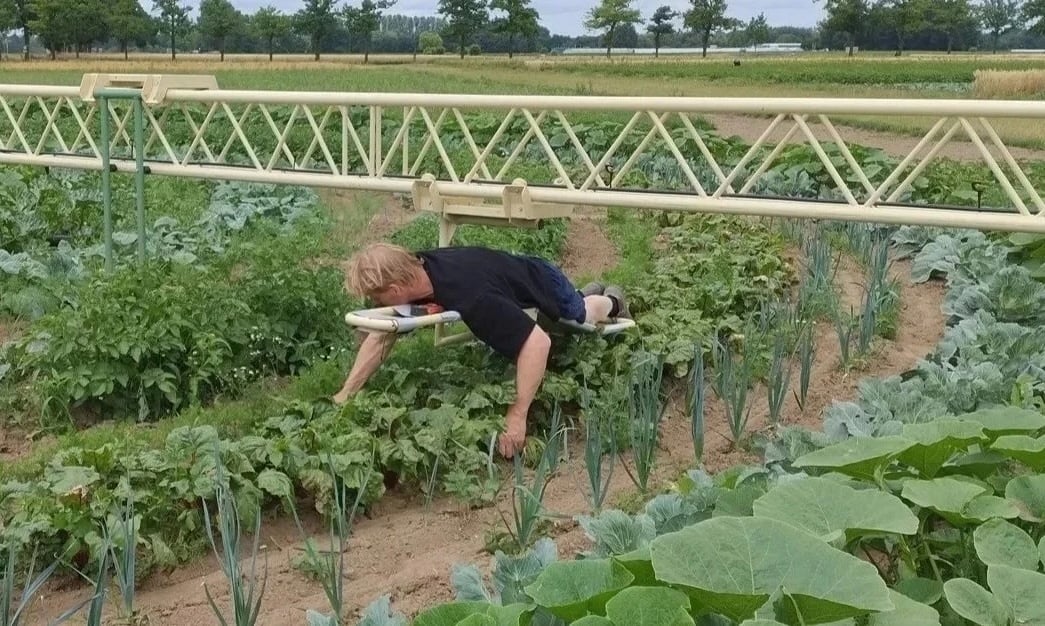
The system integrates sensors and AI to monitor crop health and offer targeted advice, while giving people a renewed role in food production. Workers use special beds attached to the robotic arm, allowing them to lie comfortably while performing tasks like weeding and harvesting as they float and glide over rows of crops. A digital platform guides workers through daily activities, potentially making agricultural work accessible to urban dwellers seeking meaningful alternatives to office jobs. Designed for smaller farms near cities, the approach offers a path to scaling production while maintaining connection to land and community.
TREND BITE
Circle Farming marks a shift from viewing automation and nature as opposing forces to seeing them as complementary. It's a human-scaled, softer form of agricultural industrialization, tailored to small (sub)urban organic farms that often struggle with the labor demands of weed control when pesticides and tractors aren't options. This blend of robotics and human effort could create landscapes that produce food while supporting biodiversity.
For brands, the innovation highlights new opportunities for bridging urban and rural divides — reconnecting consumers with the origin of the food they eat. The model also taps into the growing desire for meaningful work, suggesting that future agricultural solutions will succeed not just by being efficient, but by creating experiences that draw people back to the land.




.png)