


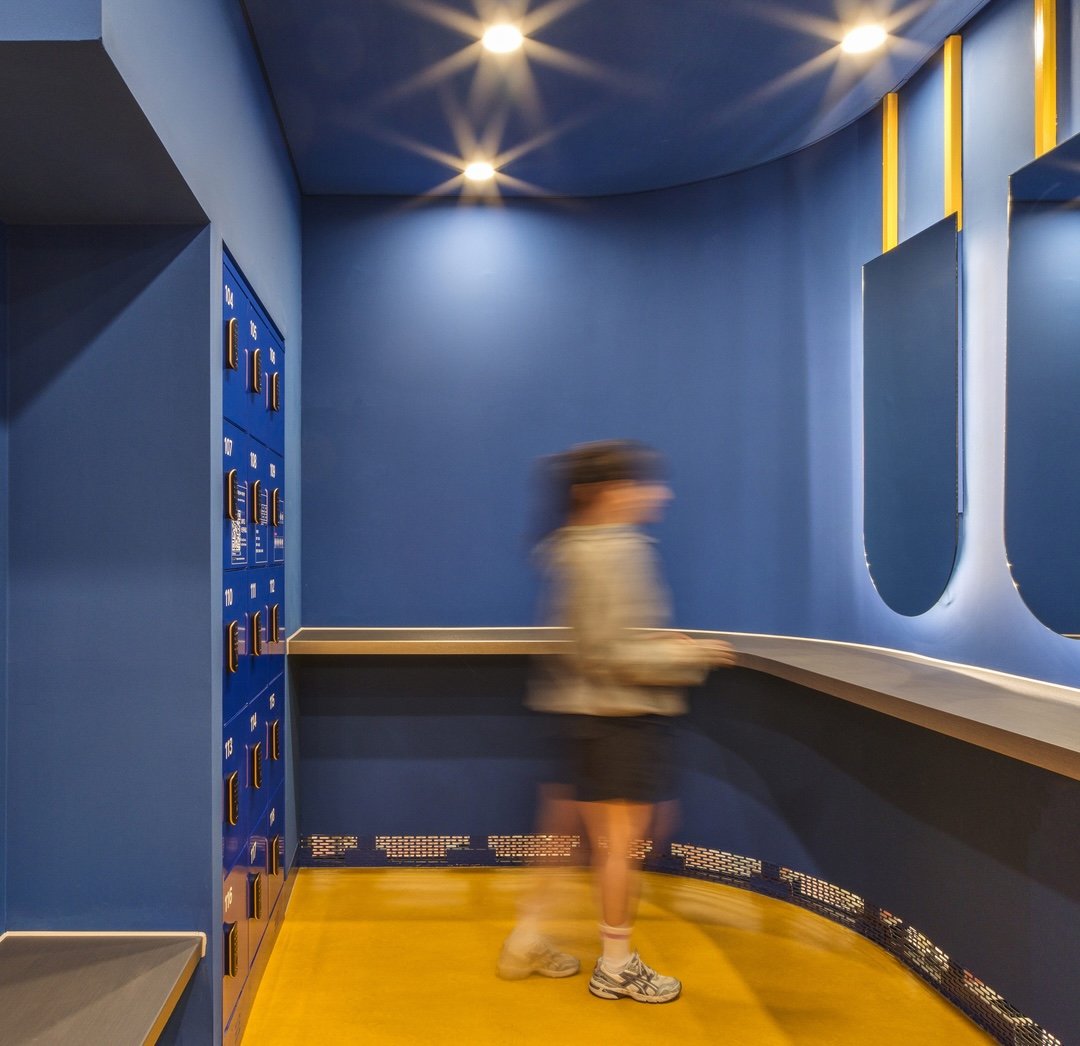
Commuters passing through Gwanghwamun Station on Seoul's Line 5 can now swap their work shoes for running sneakers without having to leave the station.
The Seoul Metropolitan Government has opened Runners' Bases at three subway stations, turning previously idle spaces into fully equipped facilities with changing rooms and lockers. Each location offers distinct programming tailored to its neighborhood and runner demographics.
The Gwanghwamun branch caters to office workers with early morning runs before the workday begins, plus weekend trail running sessions in nearby Inwangsan and Bukaksan mountains. At Hoehyeon Station near Namsan Mountain, programs focus on onboarding new runners through gradual progression from walking to jogging to longer distances. The World Cup Stadium location leverages its proximity to Sangam World Cup Park, offering everything from basic running classes to family-friendly slow runs and advanced long-distance training. All programs are free and operate on a first-come, first-served basis with 15 to 20 spots per session.
Access is straightforward: users authenticate via Naver QR codes or KakaoTalk, and lockers sync with Seoul Metro's Ttota system through a mobile app. The facilities have separate changing areas for men and women and completely free to use. "By taking into account various citizens' opinions, we established Runners' Bases, where people can take care of their health on their own at locations convenient to their daily lives," said Lim Chang-soo, Director General of Seoul's Future Urban Spaces Planning Bureau.
TREND BITE
Seoul's Runners' Base initiative demonstrates how cities can reimagine public infrastructure as lifestyle infrastructure. The initiative responds to what officials are calling the "era of 10 million runners" — South Korea counted 8.83 million active runners in 2022, and the number continues to climb. The distinction between "athlete" and "regular person" has blurred, and running is less about elite performance and more about health, identity and stress management.
By embedding wellness facilities directly into the public transportation network, the program addresses a fundamental shift in how people approach sports, and health in general: as an integral part of daily life. The facilities remove small but significant friction points — where to change, where to store belongings — that often prevent urban dwellers from incorporating movement into their routines.




.png)