

Forever smarter with our new free membership ๐ŸŽ‰

Subscribe-Image-2024_2
All yours

Newsletter + Reports + Courses

Sign up for free
STILL MADE HERE
12 May 2025

Since early April, itโ€™s been tariff turbulence. But now? A 90-day truce. The US and China just agreed to dial back duties, with US tariffs on Chinese goods dropping from 145% to 30%, and China cutting duties on US imports from 125% to 10%. For now...

As prices surge and profit margins tighten, brands are turning tariffs into marketing moments โ€” from pre-tariff flash sales to tariff price labeling. According to ThredUp, 59% of US shoppers are turning to more affordable options โ€” like secondhand fashion โ€” in response to Trumps' chaos economy. That number jumps to 66% among Gen Z.

Meanwhile, โ€˜buying localโ€™ is taking center stage. Consumers' desire for locally-made products has evolved from a niche preference to an economic and political statement. Escalating trade tensions mean that the appeal of โ€˜localโ€™ extends beyond authenticity, with provenance becoming a way for consumers to express both political values and cultural identity.

For brands, this shift necessitates a rethink of heritage and supply chain stories in ways that build economic resilience while appealing to increasingly discerning buyers. How will you cater to consumers who leverage their purchasing power as an expression of solidarity and defiance?

SOCIAL FABRICS
9 May 2025

A concept bar by Suntory features a unique twist. Instead of ordering a drink by name โ€” say, a Sidecar or a Paper Plane โ€” visitors choose an emotion that's paired with an existing cocktail. Glass and Words, returning to Shibuya from May 2nd to 13th, offers patrons an immersive experience where words become the basis for customized cocktails.

Guests first step into the glass room, where rows of empty cocktail glasses wait on shelves, their coasters marked with descriptions of emotions. After choosing an emotion that resonates with their current mood, the guest brings their glass to a bartender, who prepares a cocktail to match and explains its ingredients. The experience simultaneously demystifies cocktail culture for newcomers while creating an emotionally resonant experience.

Following last year's completely sold-out debut, Suntory has doubled reservation slots, expanded drink offerings and incorporated phrases submitted by popular influencers. Priced at JPY 1,000, each visit includes one alcoholic or non-alcoholic beverage.

TREND BITE
Glass and Words aims to lower barriers for those intimidated by traditional bars while highlighting the versatility of cocktail crafting. "Many people are interested in bars but feel uncertain about stepping through the door," says Suntory. At a moment when face-to-face interactions continue to decline, the brand has created an experience with simple steps communicated in advance. For people who are entirely at home in digital realms but might worry about unfamiliar norms and social cues in IRL spaces, the concept offers both a framework and an accessible entry point.

A narrow space with shelves lined with cocktail glasses

INTERVENTION SEEKERS
8 May 2025

In Spain, Lidl is taking a significant step in the battle against childhood obesity by removing child-targeted visual elements from its private label products with lower nutritional profiles. The supermarket chain has already redesigned packaging for over 50 items and plans to extend this initiative to more than 60 products by January 2026, proactively moving ahead of any potential national regulations.

The transformation involves replacing animated characters, playful names and bright colors with more subdued, product-focused designs. Notable examples include Capitรกn Rondo chocolate cookies, which have traded their pirate character for a simpler design; Ladrillos and Tubitos gummies, now showing realistic representations of the product; and chocolate milk that's swapped its cartoon dog for a more natural product image.

This initiative, part of Lidl's broader strategy to promote conscious eating, comes as childhood obesity affects one in three children in Spain. Framing obesity as a public health issue โ€” not a personal failure โ€” opens up new ways for brands to engage. If regulation hasn't already mandated the removal of 'fun' elements from less nutritious foods in your market, time to get ahead of the competition through self-regulation! How could your brand contribute to better long-term health outcomes?

DREAMS UNBOUND
7 May 2025

BBC Maestro has unveiled a writing course that uses cutting-edge AI technology to recreate Agatha Christie, allowing the world's bestselling novelist to share her writing secrets decades after her death. The two-year project, involving nearly 100 professionals, combined human expertise with AI innovation to digitally resurrect the author. Actor Vivien Keene, selected after an 18-month casting process involving 150 auditions, provides the physical performance while AI technology transforms her appearance and voice to recreate Christie's likeness as closely as possible.

What sets the project apart is its meticulous attention to ethical considerations and authenticity. Created in full collaboration with Christie's family, the course draws exclusively from Christie's own recordings and writings. A team of leading academics and Christie scholars carefully analyzed her manuscripts, letters and interviews to extract her views on writing.

Far from eliminating jobs, this application of AI demonstrates how new technology can create employment opportunities: 100 people worked on the project, expanding BBC Maestro's typical production team to include specialists in period costume, hair and makeup design, visual effects experts who recreated Christie's appearance, and sound engineers who transformed Keene's voice into Christie's. This collaborative blend of human artistry and technological innovation points toward a future where AI amplifies creative work rather than diminishing it.

TREND BITE
The new course positions Agatha Christie not just as a literary icon, but as a mentor for 21st-century aspiring writers, allowing new generations to learn directly from one of literature's greatest minds in her own words. We've entered an era where influential figures can 'live on' as interactive educators. People want to learn from the greats, and now they can.

How Christie was brought to life feels respectful, not dystopian. Every decision โ€” from casting to voice tech to visual nuance โ€” appears to have been guided by integrity. In an age of deepfakes and digital cloning, that level of consideration aligns with a growing consumer expectation: if tech is going to replicate the dead, it better be meaningful, ethical and deeply crafted.

WORTHWISE
6 May 2025

According to EYโ€™s March 2025 Future Consumer Index, based on 20,000+ consumers across 26 countries, brand recognition alone no longer cuts it.

๐Ÿšจ The loyalty lag
In a climate of shrinking wallets and endless choices, loyalty has become a luxury:

โ†’ 88% say brand messaging doesnโ€™t reflect their needs or values
โ†’ 36% no longer factor brands into their purchase decisions
โ†’ 54% only buy branded products if theyโ€™re discounted
โ†’ 67% say private labels meet their needs just as well
โ†’ 36% of those whoโ€™ve switched to private labels donโ€™t plan to go back


โšก Relevance > recognition
Consumers arenโ€™t abandoning brands, theyโ€™re reprioritizing. What matters now is relevance, reliability and real value:

โ†’ 48% would return if quality, taste or performance improves
โ†’ 42% are skeptical of innovations that feel like shortcuts
โ†’ 68% expect brands to take meaningful action on sustainability


๐Ÿ” What now?
This isnโ€™t a loyalty collapse โ€” itโ€™s a relevance reset. To stay in the game, brands must shift from storytelling to signaling clarity. Prove your worth through visible quality, transparent pricing and sustainability with substance. Donโ€™t just say your brand is better โ€“ prove it, consistently and clearly. In a market shaped by abundance and anxiety, the brands that solve real problems, deliver real value and stay in sync with shifting expectations are the ones consumers will return to.

CONSUMER AGENT ECONOMY
5 May 2025

Visa has launched Visa Intelligent Commerce, opening its payment network to AI developers building the next generation of shopping experiences. The program allows AI agents to securely find and buy products on behalf of consumers, transforming how people shop online. Working with tech giants like Anthropic, Microsoft, OpenAI and Samsung, Visa aims to create a trusted foundation for AI-powered commerce.

At the heart of this innovation are 'AI-Ready Cards' that replace standard card details with tokenized credentials, enhancing security while confirming an agent's permission to act on a consumer's behalf. The system puts users firmly in control, allowing them to set spending limits and conditions. Visa's experience with fraud management and data security underpins the technology, positioning the company as a trusted intermediary in the emerging AI shopping landscape.

TREND BITE
Visa isn't just enabling transactions; it's offering a trust infrastructure. As AI agents gain autonomy, consumers require transparent guardrails: spend controls, real-time oversight and dispute mechanisms. Services that provide confidence and clarity in automated decisions will set the stage for delegated convenience, where consumers define preferences once and trust agents to act on their behalf.

BLANK SLATE
2 May 2025

A barebones EV that will cost just USD 20K after a federal tax credit, the newly announced Slate truck โ€” backed by Jeff Bezos โ€” is creating a lot of buzz. Not just for its low price but also for how it challenges automotive norms. Here's how the vehicle aligns with four consumer trends:

SAVINGS BY DESIGN
In a market where economic uncertainty has consumers scrutinizing every purchase, Slate's no-frills approach to affordability is baked in:
๐Ÿ’ฐMolded plastic bodies instead of costly paint jobs
๐Ÿ’ฐ Manual windows and other simplified controls
๐Ÿ’ฐ Bring-your-own-tech philosophy leverages devices people already own

UPGRADIA
The truck's modular design makes for unusual levels of ongoing customization. Drivers can adapt the vehicle to their personal style and changing needs or add more luxury when they've saved up for it:
โœจ Transformation from two-seat pickup to five-seat SUV without specialized tools
โœจ 100+ 'Slate Attach Points' accommodate a wide range of accessories
โœจ Wrap kits starting around USD 500 enable affordable color changes

SECOND LOVE
Slate extends the concept of vehicle longevity by empowering owners to maintain and repair their own trucks:
๐Ÿ”ง A dedicated learning platform called Slate U provides step-by-step videos and tutorials
๐Ÿ”ง DIY-friendly design makes repairs accessible to non-mechanics
๐Ÿ”ง "You'll go from Slate novice to DIY master in no time"

MANUAL MODE
While most auto manufacturers have gone all in on touchscreens and automatic everything, Slate recognizes people are willing to sacrifice a bit of convenience for a lower price and mechanical simplicity:
๐ŸคŸ Manual windows have an analog charm
๐ŸคŸ Simplified systems reduce electronic failure points
๐ŸคŸ Basic design elements favor function over (excessive) tech

What if the future of driving isn't smarter tech, but smarter trade-offs? Slate is betting drivers are ready to swap excess for agency. By stripping away legacy expectations and letting owners build up from zero, Slate speaks to consumers raised on IKEA, Roblox and iPhones with cracked screens โ€” practical, hands-on and unafraid of a little hacking.

AMBIENT WELLNESS
1 May 2025

Fusing healthcare and residential architecture, traditional herbal medicine brand Saishunkan Pharmaceutical has unveiled Positive Age House, a home designed to enhance the body's self-healing capabilities. Developed in collaboration with building company Lib Work, the concept stems from Saishunkan's observation that Japanese people spend approximately two-thirds of their lives at home, making living environments crucial determinants of health outcomes.

Rather than relying on technology, Saishunkan has applied its expertise in traditional medicine to create living spaces that stimulate the body's innate recovery mechanisms. Key features include a circadian lighting system that adjusts color temperature throughout the day to maintain biological rhythms, textured 'ripple flooring' that stimulates foot pressure points, and deliberate floor height differences that compel residents to exercise their joints as they move from one space to the next.

WHY A HEALING HOME?

Healthspan over lifespan
People increasingly care less about just living longer and more about living well for longer โ€” physically, mentally and emotionally.

Post-pandemic revaluation of the home
After forced time indoors, people realize their immediate surroundings deeply impact their mental and physical well-being.

Shift from passive to proactive health
Health isn't just about medicine or hospitals; it's about everyday lifestyle choices, like movement, light exposure, diet, and now, one's home.

More nature, less tech
While technology brands push smart homes, the Positive Age House represents a counter trend of returning to nature, focusing on sunlight, airflow, wooden floors, circadian lighting and natural materials. (Related: the ultrarich are unplugging from smart homes.)

SOCIAL FABRICS
30 April 2025

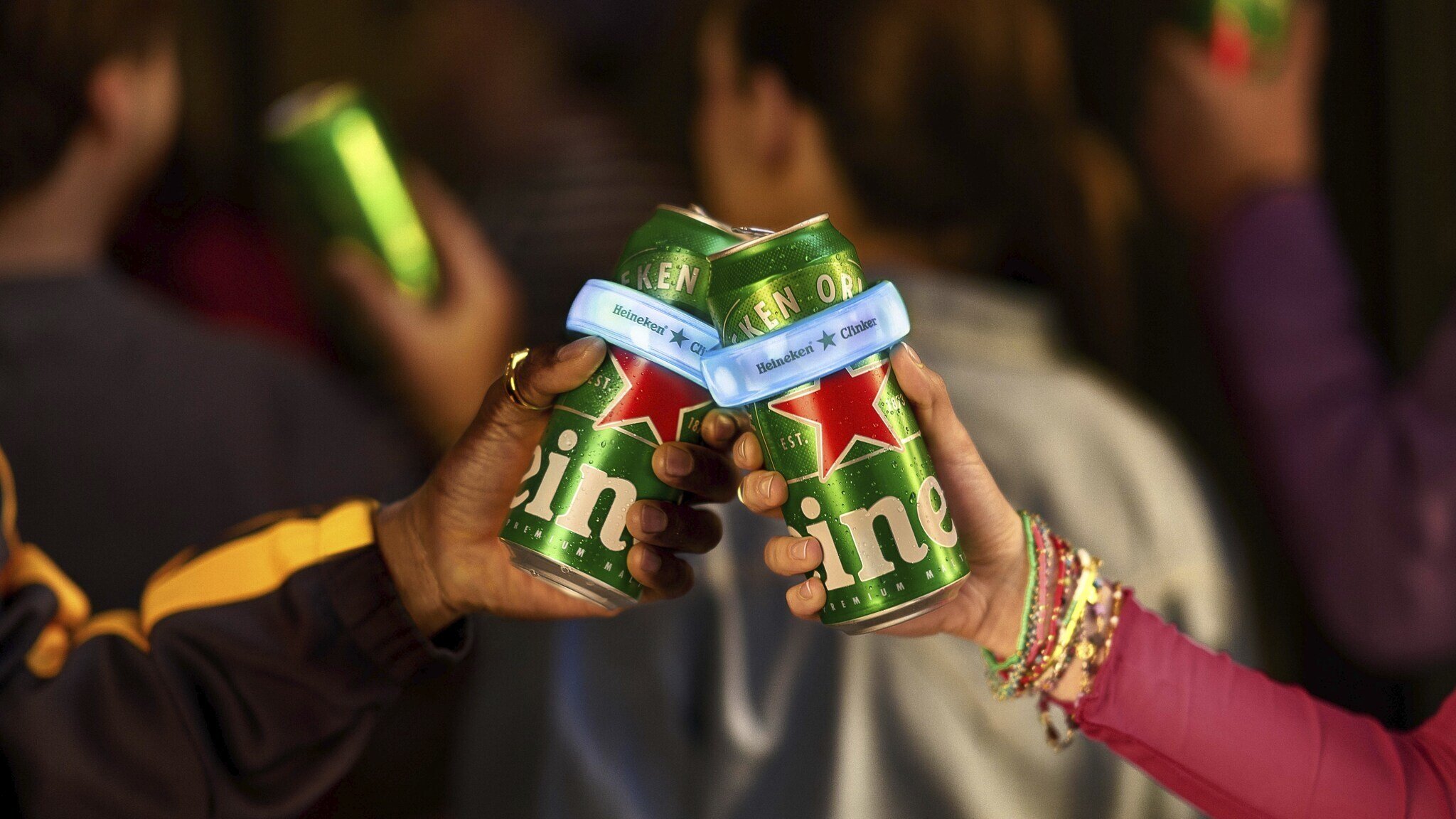
According to new global research by Heineken, surveying over 17,000 people across nine* countries, adults now spend an average of 5 hours and 48 minutes a day on their devices. Behind the screen:

๐Ÿ“ˆ 59% say their phone use has increased over the past year
๐Ÿ“‰ Time spent socializing IRL has dropped 35% over the past 24 years
๐Ÿ”‹ 51% say their social battery is drained by online communication, rising to 62% among Gen Z
๐Ÿ˜” 62% admit they sometimes feel lonely, despite being constantly connected, 75% among Gen Z
๐Ÿ“ต 64% wish they could go back to a time when people socialized without smartphones

Aiming to grant that wish, Heineken launched its new campaign โ€” Get Social, Off Socials โ€” with an IRL event in New York City headlined by Joe Jonas. The activation dramatized what happens when people step away from social platforms: their social feeds go quiet, but their social lives light up.

The campaign also features creators like Dude With Sign, Lil Cherry and Paul Olima, turning the irony of empty feeds into a rallying cry for presence over posting. It builds on Heineken's long-term commitment to fostering offline connection โ€” including its Boring Phone, Forgotten Beers campaign and a GBP 39M investment to revive 62 pubs in the UK.

๐Ÿ’ก As screen fatigue deepens and IRL nostalgia rises, brands that help people disconnect digitally and reconnect meaningfully will tap into a powerful emotional and social undercurrent โ€” and perhaps usher in a new kind of social capital.

* ๐Ÿ‡บ๐Ÿ‡ธ๐Ÿ‡ฌ๐Ÿ‡ง๐Ÿ‡ช๐Ÿ‡ธ๐Ÿ‡ป๐Ÿ‡ณ๐Ÿ‡ฟ๐Ÿ‡ฆ๐Ÿ‡ง๐Ÿ‡ท๐Ÿ‡ฉ๐Ÿ‡ช๐Ÿ‡ฎ๐Ÿ‡ณ๐Ÿ‡ฆ๐Ÿ‡ช

FREEDONISM
29 April 2025

Having trudged through years of burnout and work-centered identities, millennials are now diving headfirst into leisure pursuits with unprecedented intensity. In an essay published earlier this month, writer Anne Helen Petersen identified this phenomenon as 'Millennial Hobby Energy' โ€” characterized by ambitious expansion, resistance to monetization and a distinctive aesthetic sensibility that transforms simple pastimes into branded experiences.

Petersen traces this pattern to millennials' formative experiences, where activities were valued primarily as achievements or resume builders rather than sources of joy. Now in their thirties and forties, many are rediscovering hobbies only to find themselves unable to approach them casually. From growing 500 dahlias instead of four to transforming a couch-to-5K program into marathon training, millennials tend to make their hobbies "big and ambitious," while simultaneously fighting the internalized pressure to monetize. The result is a contradictory relationship with leisure โ€” one that's both liberating and exhausting.

While hobbyists have existed across generations, the millennial iteration reflects the unique pressures of life in the 2020s. As Petersen explains, millennials pursue their passions "under the long, lingering shadow of Covid, amidst the rise of local and global fascism, dependent upon yet resentful of digital technologies," alongside financial precarity and climate anxiety. This context transforms hobbies from simple pastimes into emotional lifelines โ€” activities that make life "feel large" in an era characterized by uncertainty and constraint.

For brands, understanding this relationship provides insight into how leisure activities function as counterbalances to modern stressors. If emotional benefits โ€” calm, flow, wonder, mastery โ€” are now the core product, which fresh avenues does that open up for your brand? How will you adapt your storytelling, customer service and community engagement?

WORTHWISE
28 April 2025

A Los Angeles-based startup is bringing an unexpected twist to the fertility industry with a social impact model typically seen in consumer goods. Cofertility's Split program allows women to freeze their eggs for free when they donate half of the retrieved eggs to families who cannot otherwise conceive. This innovative approach transforms the traditional egg donation process, which has historically been criticized for commodifying women's bodies and reproductive capabilities.

For people who want to preserve all of their eggs for their own use, the company also offers a 'Keep' program at a cost, while still providing community access and preferential storage rates. Cofertility recently secured Series A funding of USD 7.25 million. The capital will fuel expansion of Cofertility's proprietary platform, which handles everything from matching donors with recipients to managing the complex fertility journeys of its members.

TREND BITE
With the average age of first-time mothers continuing to climb in developed countries, demand is growing for life-stage flexibility and reproductive agency. Meanwhile, healthcare is evolving from transactional to relational. Today's consumers โ€” especially Millennials and Gen Z โ€” increasingly expect healthcare solutions to reflect their values.

Cofertility is tapping into those broader cultural shifts by moving fertility from a medicalized, often opaque and costly journey, to something more values-driven, community-oriented and transparent. Through no-cost options via the Split model, it democratizes access to egg freezing โ€” historically an expensive and exclusive option โ€” while building an emotionally powerful value exchange around helping others. The platform isn't just about eggs โ€” it's about empowerment, equity and agency.

BEYOND WORDS
25 April 2025

In larger than life projections on Shanghai's SuHe Haus building, Night Bloom reimagines climate narratives through Chinese Sign Language and Visual Vernacular (the latter is a sign-based storytelling method using expressive movement). The one-off performance, which took place on 29 March 2025, featured three deaf dancers portraying a blend of climate themes and deaf expression. Sudden storms and wilting plants represented exclusion, for example, while flourishing gardens symbolized hope and renewal. The art piece was co-created by British artist Cathy Mager and Shanghai deaf performer Hu Xiaoshu, and developed through a yearlong collaboration between deaf communities in China and the UK.

Reaching beyond artistic expression, Night Bloom highlights how deaf communities are navigating both the climate crisis and communication barriers. During extreme weather events, for example, deaf individuals often receive warnings too late due to the absence of sign language alerts. The project also questions whose voices are heard in climate discourse โ€” research shows that marginalized communities, including people with disabilities, are disproportionately impacted by climate change, yet are often not afforded a say in the decision-making that directly affects them. Night Bloom aims to highlight these challenges while raising awareness of sign language as a critical tool in climate communication.

Bringing art into public spaces isnโ€™t new. But Night Bloom leverages eye-catching aesthetics to surface a powerful message and spark conversations. What urgent message does your brand need to communicate? And could a familiar format deliver it in an unexpected, impactful way?

SAFETY NET
24 April 2025

A troubling trend has emerged on clothing resale platforms like Vinted: women who post photos of themselves wearing items see better sales but risk harassment and having their images posted on misogynist forums. Vienna-based startup Minimist aims to tackle the issue with generative AI.

As reported by Brutkasten, Minimist is developing a tool that lets sellers showcase clothing on realistic AI-generated models instead of their own bodies. After uploading an image of the item, users receive a professionally rendered photo featuring a lifelike avatar โ€” preserving anonymity while maintaining visual appeal.

The feature will be part of a broader suite of recommerce tools aimed at streamlining clothing resale. Initially targeting consignment, vintage and second-hand stores, Minimist is currently testing automatic background removal and lighting enhancements to help sellers produce polished, high-quality product photos.

GAME ON
23 April 2025

Global sports brand PUMA is elevating the early morning run from a personal habit to a communal adventure with its new 5 AM High Drops activation. Launching in Boston, Tokyo, London, Mexico City and other major cities through April and May, the campaign rewards dedicated dawn runners by leaving free pairs of the latest PUMA running shoes at elevated locations along city streets.

The initiative transforms the solitary ritual of pre-dawn running into a gamified, social experience. Participants need to check PUMA's local Instagram channels at 5 AM to discover the secret "high drop" locations, then be among the first to reach those spots to claim their prize: a pair of Deviate NITRO 3 or Forever Run shoes. The scavenger hunt element turns routine runs into micro-adventures, and those crack-of-dawn drops make for highly shareable moments: story and badge of honor rolled into one.

PUMA's customers aren't just buying products; they're seeking peak experiences and moments of self-transcendence in everyday life. By celebrating those who "re-arrange their lives to chase the runner's high," PUMA aligns with that desire and with a fast-growing cohort of people who view physical exercise as foundational to their identity and emotional resilience.

AI GENIES
22 April 2025

California-based startup Sparq aims to radically change how drivers interact with their vehicles. Its flagship product is a compact device that plugs into a car's OBD-II port, typically located near the driver's seat. Like existing OBD-II scanners, it retrieves a range of diagnostic data points. But while most of those tools cater to gearheads, Sparq makes a vehicle's data easy for anyone to understand โ€” and act on.

After debuting at the Los Angeles Auto Show in late 2024, Sparq expanded its capabilities in March 2025 to include full conversational AI support. Through an app, drivers can now communicate with their vehicles using voice commands, text, images and even recordings of troubling sounds. The app generates a general health score for the car and offers cost estimates if repairs are needed.

The technology addresses a core imbalance in automotive care: most drivers lack access to or fluency in technical information related to their cars. Sparq translates complex diagnostics into plain English, transforming how consumers interact with software-heavy vehicles. Its 'Timelapse' feature compiles a car's complete service history with predictive maintenance prompts, while 'Glovebox' digitizes ownership documents and links them to specific issues.

Sparq's approach illustrates how AI can serve as an equalizing force, providing transparency in markets where information asymmetry historically disadvantaged consumers. For brands across sectors, it's a cue to build tools that move expertise out of silos and into users' hands.

Back to Top