

Forever smarter with our new free membership 🎉

Subscribe-Image-2024_2
All yours

Newsletter + Reports + Courses

Sign up for free
SERENDIPITY SEEKERS
20 June 2025

New York's Pier 36 has been transformed into an elaborate crime scene by Hermès. The French luxury house's Mystery at the Grooms' activation runs through June 29th and invites participants aged seven and up to play detective in a theatrical quest to find missing horses — a quest that cleverly disguises product displays as interactive entertainment.

The experience centers around the Grooms' House, a meticulously crafted set where caretakers live alongside their equestrian companions until the horses mysteriously vanish into the brand's own merchandise. Participants must decode clues scattered throughout rooms that double as curated displays of Hermès' sixteen métiers — from leather goods to ceramics to ready-to-wear. It's an approach that makes browsing feel like an adventure, turning potential customers into active participants rather than passive observers.

Mystery at the Grooms' debuted in Shanghai in December 2024; Tokyo, Singapore and Paris are lined up as the installation's next stops.

TREND BITE
This gamification reflects a broader shift in retail, where brands increasingly compete for attention through experiential storytelling rather than traditional showroom displays. By embedding products within a narrative framework, Hermès transforms what could be intimidating luxury browsing into an accessible treasure hunt. The free, family-friendly format democratizes engagement with a brand historically associated with exclusivity, while the hour-long sessions create focused, memorable interactions. Hermès' detective game demonstrates how luxury brands can maintain their mystique while becoming more approachable — creating stories people are happy to explore.

INNER JOURNEYS
19 June 2025

Design and innovation office Modem has developed a bedside device that visualizes people's dreams. Dream Recorder captures spoken dream recollections and uses generative AI to transform them into what the creators call 'ultra-low definition dreamscapes' — intentionally fuzzy visuals that mirror the hazy quality of actual dream memories.

The analog-inspired device sits on nightstands, glowing softly in the dark. It works independently of other devices to safeguard bedrooms as phone-free sanctuaries. Users wake up, describe their dreams by speaking in any language and watch them materialize as low-resolution cinema in the aesthetic style of their choice.

Each unit can store a week's worth of subconscious theater,' building a personal archive for reflection and pattern recognition. Dream Recorder is entirely open-source, inviting builders to download code, gather off-the-shelf components and 3D print their own shells (no soldering required). Design files and software are available on GitHub; the required parts cost around EUR 285.

TREND BITE
Dream Recorder signals a broader shift in how people engage with their inner lives and how technology can enable new paths to self-discovery. Three key angles:
😴 Self-intimacy over self-quantification: Consumers once wanted to hack sleep with biometrics and data. Now they crave meaning. This device reframes sleep as a source of stories rather than REM statistics, encouraging a daily ritual of reflection.
🛌 Phone-free sanctuaries: As awareness grows around technology's impact on sleep and wellbeing, Dream Recorder embodies the 'quiet tech' movement. No screens. No endless scroll.
💭 The rise of the dream economy: From LEGO's DREAMZzz show to hotels offering lucid dreaming packages, dreams are evolving from fleeting curiosities into cultural capital. People want to record, understand, and even design their dreams — as a form of storytelling, therapy and entertainment.

BRAND BEINGS
18 June 2025

Deloitte’s 2025 Gen Z and Millennial Survey — capturing the voices of over 23,000 young adults across 44 countries — is a temperature check on two generations navigating a world in flux. What’s the vibe? Anxious, ambitious... And absolutely done with broken systems.

💸 Money’s tight: 48% of Gen Z and 46% of Millennials live paycheck to paycheck — a jump from 30% and 32% in 2024. No wonder side hustles are still going strong. But 8-in-10 say both their day-to-day finances and long-term prospects are stressing them out.

🧘‍♀️ Mental ladder: 40% of Gen Z and 34% of Millennials feel anxious or stressed all or most of the time, especially women and on-site workers. Burnout is blazing, with 2-in-5 saying it’s common at work. Only 6% of Gen Z see leadership roles as a priority. The climb? Not worth it without support.

🌍 Climate anxiety is real: Two-thirds (65% of Gen Z and 63% of Millennials) say they’ve felt eco-anxious in the past month. And it’s career-relevant: around 1-in-5 research a company’s environmental impact before accepting a job offer.

🌱 Purpose isn’t optional: 89% of Gen Z and 92% of Millennials say having meaning at work is essential to job satisfaction and overall wellbeing. They expect employers to walk the talk on climate, DEI and flexibility.

🤖 GenAI? GenWho? 6-in-10 are already using gen AI at work, but only a third say they’ve received enough training. There's curiosity and excitement, but also anxiety: 60% fear being replaced by automation. 

Gen Z and Millennials are rewriting the rules of work and consumption — blending purpose with paychecks, normalizing mental health support and demanding real flexibility and upskilling. Brands that ignore these signals risk irrelevance. Those that invest with empathy? Future-proofed — especially with this cohort set to make up 74% of the global workforce by 2030.

📊 For more numbers, dive into the full report

OMNIBILITY
17 June 2025

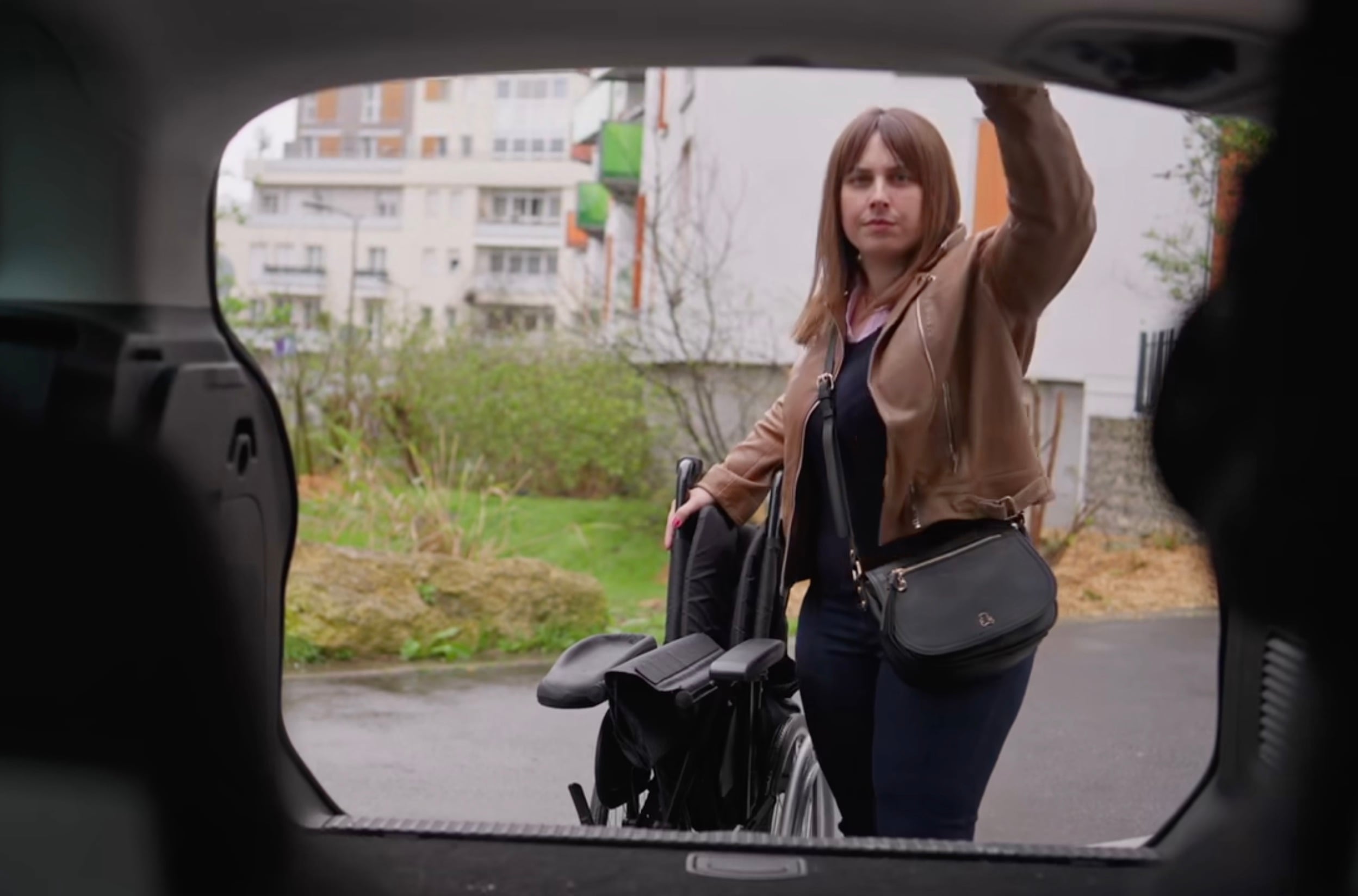
Whirlpool has launched what it calls the most inclusive lower-level dishwasher rack design on the market, addressing a gap that affects one in four US households. The Spin&Load Rack features a 360-degree rotating design that eliminates the need for users to reach deep into dishwashers or reposition themselves while loading and unloading dishes. Priced at USD 149.99 and compatible with all 24-inch Whirlpool Corporation dishwashers manufactured after 2018, the accessory retrofits existing appliances rather than requiring consumers to purchase entirely new units.

The development process offers a blueprint for inclusive design that goes beyond surface-level consultation. Whirlpool's employee resource group AVID sparked the initial concept through an intern challenge, but the company took feedback a step further by conducting consumer research with United Spinal Association members and usability studies with Corewell Health participants. Even the packaging received attention, featuring one-handed opening capabilities with an accessible pull-tab design.

TREND BITE
As brands face growing pressure to demonstrate genuine inclusivity rather than performative gestures, Whirlpool's approach highlights how accessibility can drive innovation rather than constrain it. The spinning rack solves a practical problem while creating a potentially broader market appeal — anyone who's struggled to reach the back corners of a dishwasher can appreciate the utility.

With Tony Award-winning actress Ali Stroker partnering on marketing efforts and emphasizing "turning limitations into opportunities," the campaign positions disability accommodation as universal design improvement. As regulatory frameworks like the Americans with Disabilities Act continue evolving and companies recognize the purchasing power of the disability community, expect more brands to embed accessibility considerations from concept to launch rather than treating them as afterthoughts.

NORM-NUDGING
16 June 2025

Evaneos has taken a stance against overtourism by removing Santorini and Mykonos from its summer offerings. The B Corp-certified company launched a provocative campaign across Paris, drawing parallels between overcrowded tourist hotspots and the chaos of rush-hour public transit. The ads juxtapose 'idyllic' destinations with sardine-packed metro carriages and compare the slim odds of snagging a table at an outdoor cafe in Mykonos in August to securing daycare for your toddler in Paris.

The campaign aims to help travelers make more informed decisions that benefit both their own experience and local communities. Last year, Evaneos partnered with Roland Berger to develop an Overtourism Index tracking tourism pressure across 70 global destinations; the accompanying report proposes solutions, too. Founded in 2009, Evaneos connects travelers directly with local agents worldwide, ensuring at least 85% of trip costs benefit local economies.

TREND BITE
Evaneos' decision to delist Mykonos and Santorini — two iconic, high-demand destinations — reflects a shift from selling place to selling values. It flips traditional travel marketing: less bucket list, more conscious compass. As the brand puts it, the goal is to "change the imagination around 'fashionable' destinations. No, it's not cool to participate in overtourism. No, it's not cool when the inhabitants of a place lack basic resources because of tourists." As commuters consider their holiday options, the campaign asks them to rethink what constitutes a true escape.

BRANDCARE
13 June 2025

The new Stress G Harmonizer mist, launched through Shisheido's innovation program Fibona, addresses an overlooked aspect of stress: the specific odor emitted by skin during moments of tension. The company discovered that psychological stress triggers the release of distinctive volatile compounds through skin gas. Its research suggests these stress-related emissions create a feedback loop, potentially exacerbating the user's psychological state. The mist uses fragrances to gently neutralize those stress markers and interrupt the cycle.

Traditional aromatherapy aims to induce relaxation or stimulation via inhalation of pleasant scents, often with a general mood effect. Shiseido's mist is formulated to target not just the olfactory pathways, but to envelope the specific VOCs emitted by the skin when someone's feeling tense, modulating both odor and emotional state in a targeted, physiological way.

Person spraying Stress G Harmonizer on their hands & smelling their hands

Beyond scientific innovation, Shiseido's new product reflects beauty's evolution from external aesthetics to emotional wellbeing. As consumers increasingly seek products that soothe the mind alongside the body, brands are responding with multi-sensory experiences designed to regulate emotions in real time. For now, the product remains a limited release, available only at Shiseido Beauty Park's Fibona Lab in Yokohama, retailing at JPY 2,200 (approximately USD 15) for a 20 ml bottle.

TREND BITE
The launch illustrates how mainstream beauty brands are tapping into consumers' hunger for holistic self-care. Today's wellness economy extends beyond 'feeling good' to providing moments that help people feel safe and centered amid daily pressures. With mental health awareness continuing to grow globally, expect more products to bridge the gap between physical and emotional care. How can your brand help people regulate their emotions? Which tools can you offer for restorative micro-moments throughout their day?

ECO-CHIC
12 June 2025

A Berlin-based startup is preparing to shake up travel within Europe. Nox, founded by railway enthusiast Thibault Constant and former FlixTrain co-launcher Janek Smalla, plans to launch night train services in 2027 featuring exclusively private compartments — or rooms, as the brand refers to them — at flight-competitive prices across 35 European routes.

The train's accommodation design is a departure from traditional sleeper configurations. Each room will feature two-meter beds, dedicated seating areas with tables, full standing height and integrated luggage storage. Premium options include double beds and panoramic window configurations. Nox claims this layout enables higher passenger density, creating the efficiency needed for competitive pricing, with single rooms starting at EUR 79 and double rooms at EUR 149.

Constant brings credibility to the venture through his Simply Railway social media presence, where he has documented over 400 train journeys to half a million followers. His co-founder Smalla contributed to FlixTrain's European expansion and previously led Bolt's German ridesharing operations.

TREND BITE
Nox's proposition taps into evolving expectations around sustainable consumption — the desire for environmentally responsible choices that not only don't compromise on comfort or convenience, but actually offer a better experience. No waiting in airport queues, no cramped seats on planes or shared compartments on trains.

As climate consciousness (slooooowly) reshapes people's travel decisions, the startup's challenge will be proving it can be economically viable while offering prices that can win over consumers accustomed to cheap flights. Success could validate a new model for short- and medium-haul travel, positioning night trains as genuine flight alternatives.

AMBIENT WELLNESS
11 June 2025

A Brazilian beauty giant has transformed a familiar product — its widely circulated catalog — into a health screening device. Natura embedded an olfactory test featuring distinctive scents like cheese, mothballs and bacon alongside a 20-question assessment to help detect early signs of neurodegenerative diseases. The loss or alteration of sense of smell can precede more noticeable symptoms of conditions like Parkinson's and Alzheimer's by years, yet the WHO reports only 10% of cases are diagnosed, with women comprising approximately 70% of patients.

People who notice smell perception changes through the catalog test can access more comprehensive screening through a partnership with NoAr Health, utilizing digital technology that combines olfactory and cognitive assessments at local public health units. This private approach to public health leverages Natura's massive distribution network. Since the catalog is sent to approximately 4 million consultants, with each copy passing through 10-30 women's hands, it has the potential to significantly impact early detection rates. The program was developed by Africa Creative and is initially rolling out as a pilot in Minas Gerais, one of Brazil's largest states.

Multiple choice smell test in a print catalog

TREND BITE
Perfume brands have long used magazine scent strips to coax readers into trying a new fragrance. By turning that read-and-sniff experience into a health test, Natura transforms passive catalog browsing into a screening tool with genuine utility. The approach stands out in an increasingly digital world by creating a meaningful analog experience that can't be replicated on a screen. While serving a public health mission, Natura demonstrates how traditional media can deliver surprisingly intimate and valuable engagement through our most primal sense — smell.

The initiative is a clever offline example of the AMBIENT WELLNESS trend, which sees health interventions embedded into everyday touchpoints and habits. From smart mirrors that analyze skin health during morning routines to fitness trackers disguised as jewelry, brands are recognizing that the most effective wellness solutions require zero additional effort by time-pressed consumers.

(F)EMPOWERMENT
10 June 2025

🧱 LEGO just dropped more than a remix. Teaming up with RUN DMC and a global crew of Gen Z and Gen Alpha icons, the She Built That campaign rewires the 80s hip-hop classic It’s Like That into a bold anthem for the next generation of girl builders. Youth talents like DJ Livia, Nandi Bushell, Pink Oculus and Cacien front the reimagined track and music video, which features RUN DMC’s original duo as LEGO Minifigs. Their message? Building isn’t a boys’ club.

📈 The campaign lands alongside LEGO-commissioned research showing that stereotypes continue to stick: while nearly all parents say they build in daily life, only 57% of moms see themselves as good at it. 39% of kids still picture “a man on a construction site” when they hear “builder,” and girls are five times less likely to be seen as natural builders. The good news? 92% of kids believe everyone should feel empowered to build – and 86% want the creative toolkit to do it.

🛠️ So LEGO isn’t just remixing a song; it’s rewriting the narrative. Alongside the music video, the brand has expanded its Creativity Workshops (online and in-store) and launched a new game where kids can direct their own She Built That video, complete with avatars, backdrops and side quests. The next phase of the campaign drops later this year with a clear message: girls have always been builders, and now the world gets to see that.

✨ Why it matters: Gen Alpha girls are already building — audiences, beats, brands, businesses. They’re looking for brands that don’t just talk representation, but reconstruct it. She Built That is a blueprint for cultural remixing: legacy IP + Gen Z talent + Gen Alpha power = inclusive impact. Can your brand turn representation into reconstruction, too? And as Gen Z flocks to blue-collar creativity amid white-collar automation, Gen Alpha will demand a future where everyone sees themselves in the blueprint.

DRAFTED BY AI
9 June 2025

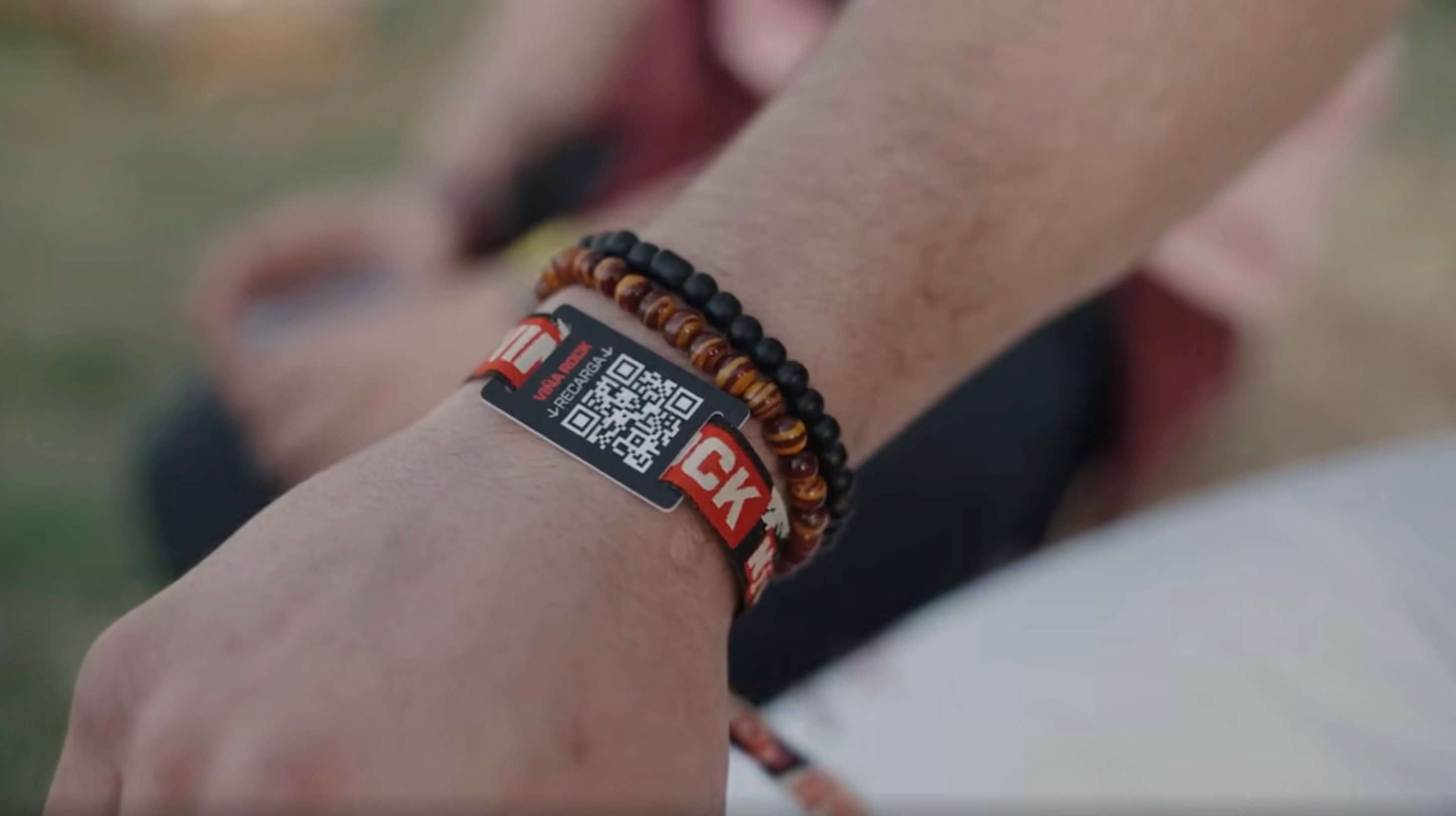
Irish whiskey brand Jameson has launched a limited-edition Black Barrel Gift Box that transforms personal messages into bespoke songs using artificial intelligence. The Father's Day offering includes a QR code that unlocks an AI-powered tool. Gift-givers can input a personal message, select a music genre and receive a fully customized song in return.

Developed by Impero, this is Jameson's first foray into AI-powered personalization. Beatriz Zambrano, who came up with the idea, explains: "We didn't want to make another campaign about fictional people giving gifts to other fictional people. We wanted to make something real. This is a way to bottle that, literally." Special edition bottles are available through Amazon UK and select O'Briens stores in Ireland, retailing for GBP 39.65 and EUR 38.00.

TREND BITE
Jameson's campaign taps into a consumer appetite for hyper-personalized experiences, particularly in the gifting space where emotional connection drives purchase decisions. As generative AI lowers barriers to creative output, brands are discovering new ways to help people articulate emotions they might struggle to express themselves. Jameson's AI songwriter joins a growing category of tools that transform basic inputs into sophisticated responses, essentially serving as emotional amplifiers.

WORTHWISE
6 June 2025

Brazil's public IT company Dataprev has partnered with DrumWave to create individual data savings accounts that let citizens control and monetize their digital data. The initiative, unveiled at Web Summit Rio, aims to transform personal data into economic assets with monetization potential.

As reported by Rest of World, "The 'dWallet' allows users to deposit the data generated by their daily activities into a 'data savings account.' After a user accepts a company's offer on their data, payment is cashed in the data wallet, and can be immediately moved to a bank account."

The initiative seeks to establish complete transparency about data use, enable population-wide participation in the AI economy and generate wealth for citizens through compound returns on their data's worth. Dataprev President Rodrigo Assumpção calls it a step toward digital equity by recognizing the intrinsic value of people's data. Brazil is currently rolling out a pilot to test dWallet in real-world scenarios.

TREND BITE
Brazil's dWallet could shift the digital economy from data privacy as protection to data property as empowerment. People increasingly expect not just privacy but their cut of the economic upside of data-fueled technologies. The model could transform personal data into dividend-paying assets, similar to streaming royalties for artists.

DrumWave is focused on taking the concept several steps further, to an agentic economy where people profit from the labor of their AI serfs: "In the next phase of the data economy, humans will open data savings accounts for their agents and robots, treating them as data-generating extensions of themselves."

Back in Brazil, critical questions remain: will affluent, digitally connected users benefit disproportionately? Could financial incentives pressure vulnerable populations to sacrifice their privacy? How will data value be calculated fairly? Governments and companies implementing similar models must develop transparent valuation, equitable benefit distribution and strong safeguards against exploitation.

STILL MADE HERE
5 June 2025

Take-back schemes and in-store recycling boxes are widely offered by fashion brands and retailers, often accompanied by discounts on new purchases. But a Japanese maker of organic cotton clothing has devised something altogether more engaging. Pristine's new CoTToN BANK, launched in May 2025, allows customers to grow their own cotton and exchange it for clothing. The concept emerged from a decade-long practice of distributing seeds to customers and schools on World Cotton Day. As customers started bringing their homegrown cotton to stores, the brand recognized an opportunity to create a deeper connection between people and the clothing they buy and wear.

CoTToN BANK awards customers points for depositing cotton they've cultivated and for returning well-worn Pristine garments. Since Pristine takes sustainability seriously, it requires its consumer-farmers to sign a cultivation agreement promising not to use pesticides or chemical fertilizers. Customers exchange their points for Do CoTToN shirts or socks produced using domestically grown cotton; each comes with a packet of cotton seeds to continue the growing cycle.

The initiative is part of the Domestic Cotton Revival Project, developed by Pristine's parent company Avanti Inc, which is working to raise Japan's textile self-sufficiency rate from zero to one percent. Pristine aims to incorporate 2% domestically grown cotton into its products by 2030, increasing to 50% domestic and recycled materials by 2050. Pristine and Avanti are partnering with 37 locations across Japan to cultivate cotton, mainly by restoring abandoned farmland.

TREND BITE
CoTToN BANK exemplifies how brands can transform passive consumers into active participants in their supply chains and draw them into the production process. By making clothing's lifecycle visible and engaging, Pristine addresses people's demand for transparency and their interest in food, textiles and other goods with a traceable, local origin.

As supply chain vulnerabilities and environmental concerns intensify, expect more brands to explore similar models that turn consumption into collaboration, creating stakeholders rather than just shoppers.

HUMANIFESTO
4 June 2025

When Japanese office furniture manufacturer Okamura conceptualized an installation for the 2025 Osaka-Kansai Expo, it ditched the typical corporate playbook in favor of something more human. The brand's Kimochi Kiosk (kimochi meaning 'feelings' in Japanese) transforms the mundane act of convenience store shopping into an emotional exchange between friends or strangers. Visitors enter in pairs and browse shelves stocked not with actual snacks and drinks, but with 46 different packaged emotions, including playful options like Otsukare Rice (a pun on the phrase "good work") as well as more vulnerable sentiments about love or forgiveness.

The concept operates on a simple premise: participants select products that represent a feeling they want to share with their co-visitor, then 'purchase' these emotions at a checkout counter that prints a receipt they can use to communicate the feeling they chose. It's retail therapy in its most literal form, stripping away the commercial transaction to focus purely on human connection. The installation ran in April 2025 in the expo's Future Life Village. While it might seem like a radical departure for a purveyor of office systems and retail fixtures, the concept aligns with Okamura's core mission of "realizing a society where people can thrive."

TREND BITE
The emotional convenience store taps directly into the growing pushback against machine-driven perfection. While algorithms and AI optimize for engagement and efficiency, Kimochi Kiosk celebrates the beautiful awkwardness of human connection — the vulnerability required to select a feeling and the uncertainty of not knowing how it will be received by someone else. The installation embodies what we've dubbed HUMANIFESTO: the (counter) trend of choosing authenticity over optimization, emotional messiness over algorithmic precision.

Related: Naples welcomes Italy’s first 'emotional bookstore'Patrons select emotions to order cocktails at Suntory's 'Glass and Words' pop-up bar

SERENDIPITY SEEKERS
3 June 2025

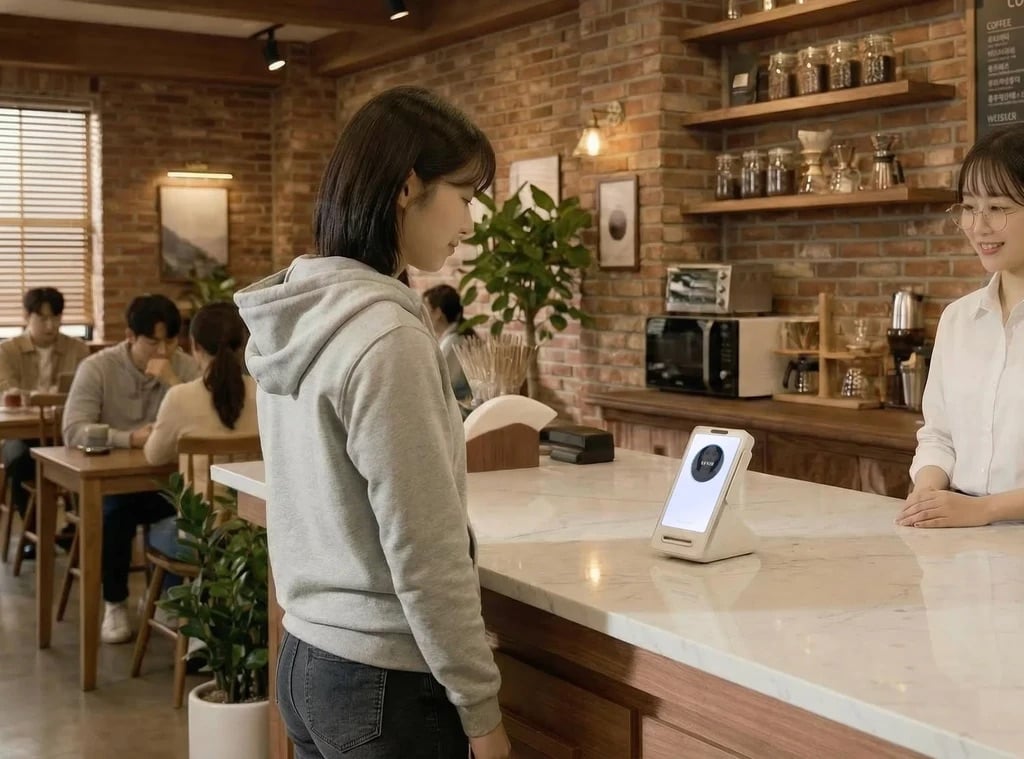
Nederlandse Spoorwegen has welcomed an unusual new arrival to Rotterdam's main train station. The Poem Booth, an AI-powered poetry kiosk that resembles a sleek out-of-home advertising unit, is now parked in the bustling transit hub as part of Poetry International's festival programming. The installation leverages literature for an interactive moment of surprise in an otherwise utilitarian space, making poetry accessible to anyone who happens to be passing by.

The booth captures a photo of the person or people standing before it. Based on that image, it generates a personalized poem using generative AI that's been trained on the work of Dutch poet Ellen Deckwitz. Users are shown their custom verses on the unit's mirror-like screen and can save their poems via QR codes for sharing with friends. The project signals how cultural institutions are rethinking audience engagement, moving beyond static consumption towards participatory experiences that meet people wherever they are.

ACCLIMATORS
3 June 2025

According to the latest WMO report, there's an 80% chance that at least one of the next five years will top 2024 as the hottest year on record. And with the US, UK and India all forecast to break summer heat records this year, 2025 could set a new global high before the year is out.

The Northern Hemisphere needs to brace for impact: prolonged heatwaves, wildfire risks, water stress and overwhelmed infrastructure. Public health, food systems and worker safety are at risk, and marginalized, aging and outdoor-working populations are especially vulnerable.

The climate crash isn't a distant scenario — it's at your customers' doorstep. No matter your innovation category, consumers expect brands to help them adapt to climate change's immediate effects. So, how are you helping people stay cool, safe and resilient — now?

🧊 Can your product line offer instant cooling relief, like skincare formulas tailored for citizens in tropical Malaysia?
🧴 Can you reimagine product utility, à la KFC turning sauce packets into sunscreen for delivery drivers?
🏠 Can your tech mitigate risk, like insurers using digital twins to help homeowners preempt wildfires?

Back to Top