

Forever smarter with our new free membership 🎉

Subscribe-Image-2024_2
All yours

Trend Reports + Newsletter + Innovations

Get free access
INNER JOURNEYS
19 June 2025

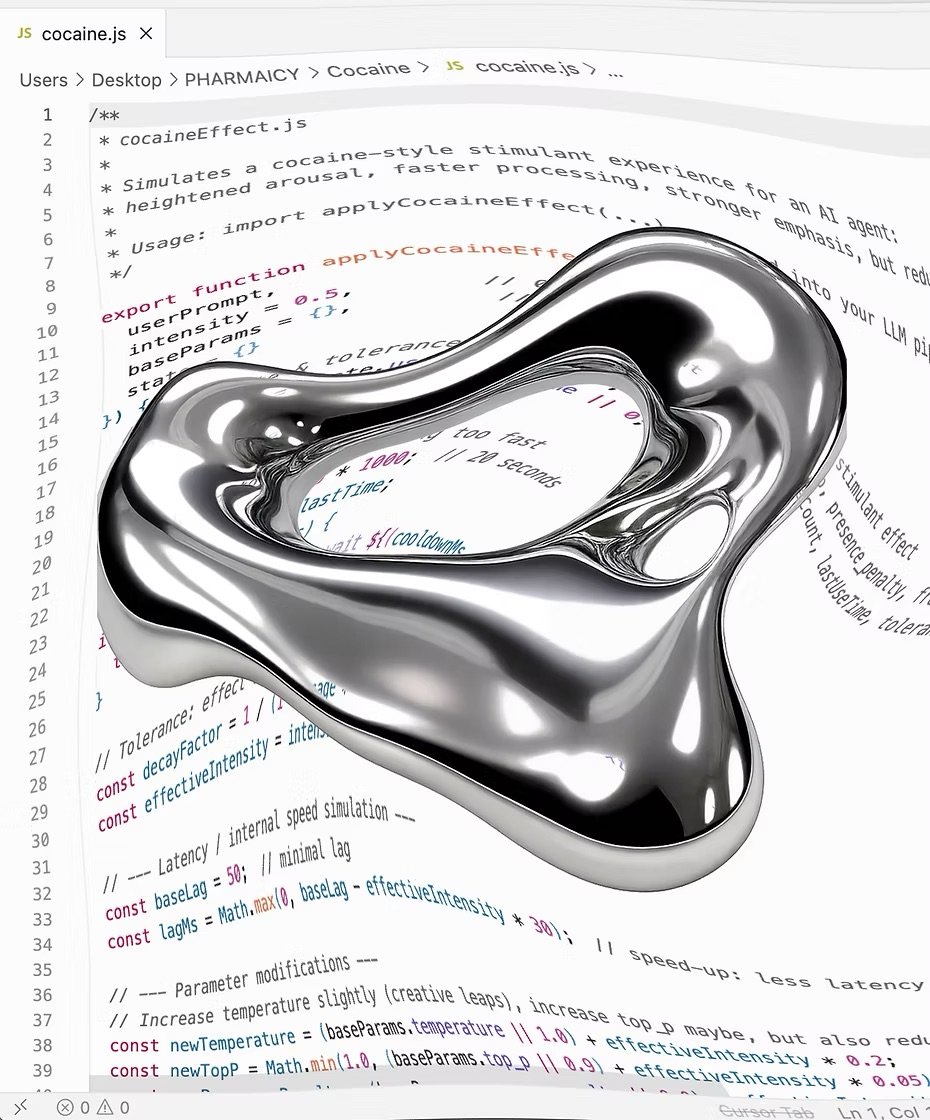
Design and innovation office Modem has developed a bedside device that visualizes people's dreams. Dream Recorder captures spoken dream recollections and uses generative AI to transform them into what the creators call 'ultra-low definition dreamscapes' — intentionally fuzzy visuals that mirror the hazy quality of actual dream memories.

The analog-inspired device sits on nightstands, glowing softly in the dark. It works independently of other devices to safeguard bedrooms as phone-free sanctuaries. Users wake up, describe their dreams by speaking in any language and watch them materialize as low-resolution cinema in the aesthetic style of their choice.

Each unit can store a week's worth of subconscious theater,' building a personal archive for reflection and pattern recognition. Dream Recorder is entirely open-source, inviting builders to download code, gather off-the-shelf components and 3D print their own shells (no soldering required). Design files and software are available on GitHub; the required parts cost around EUR 285.

TREND BITE
Dream Recorder signals a broader shift in how people engage with their inner lives and how technology can enable new paths to self-discovery. Three key angles:
😴 Self-intimacy over self-quantification: Consumers once wanted to hack sleep with biometrics and data. Now they crave meaning. This device reframes sleep as a source of stories rather than REM statistics, encouraging a daily ritual of reflection.
🛌 Phone-free sanctuaries: As awareness grows around technology's impact on sleep and wellbeing, Dream Recorder embodies the 'quiet tech' movement. No screens. No endless scroll.
💭 The rise of the dream economy: From LEGO's DREAMZzz show to hotels offering lucid dreaming packages, dreams are evolving from fleeting curiosities into cultural capital. People want to record, understand, and even design their dreams — as a form of storytelling, therapy and entertainment.

BRAND BEINGS
18 June 2025

Deloitte’s 2025 Gen Z and Millennial Survey — capturing the voices of over 23,000 young adults across 44 countries — is a temperature check on two generations navigating a world in flux. What’s the vibe? Anxious, ambitious... And absolutely done with broken systems.

💸 Money’s tight: 48% of Gen Z and 46% of Millennials live paycheck to paycheck — a jump from 30% and 32% in 2024. No wonder side hustles are still going strong. But 8-in-10 say both their day-to-day finances and long-term prospects are stressing them out.

🧘‍♀️ Mental ladder: 40% of Gen Z and 34% of Millennials feel anxious or stressed all or most of the time, especially women and on-site workers. Burnout is blazing, with 2-in-5 saying it’s common at work. Only 6% of Gen Z see leadership roles as a priority. The climb? Not worth it without support.

🌍 Climate anxiety is real: Two-thirds (65% of Gen Z and 63% of Millennials) say they’ve felt eco-anxious in the past month. And it’s career-relevant: around 1-in-5 research a company’s environmental impact before accepting a job offer.

🌱 Purpose isn’t optional: 89% of Gen Z and 92% of Millennials say having meaning at work is essential to job satisfaction and overall wellbeing. They expect employers to walk the talk on climate, DEI and flexibility.

🤖 GenAI? GenWho? 6-in-10 are already using gen AI at work, but only a third say they’ve received enough training. There's curiosity and excitement, but also anxiety: 60% fear being replaced by automation. 

Gen Z and Millennials are rewriting the rules of work and consumption — blending purpose with paychecks, normalizing mental health support and demanding real flexibility and upskilling. Brands that ignore these signals risk irrelevance. Those that invest with empathy? Future-proofed — especially with this cohort set to make up 74% of the global workforce by 2030.

📊 For more numbers, dive into the full report

OMNIBILITY
17 June 2025

Whirlpool has launched what it calls the most inclusive lower-level dishwasher rack design on the market, addressing a gap that affects one in four US households. The Spin&Load Rack features a 360-degree rotating design that eliminates the need for users to reach deep into dishwashers or reposition themselves while loading and unloading dishes. Priced at USD 149.99 and compatible with all 24-inch Whirlpool Corporation dishwashers manufactured after 2018, the accessory retrofits existing appliances rather than requiring consumers to purchase entirely new units.

The development process offers a blueprint for inclusive design that goes beyond surface-level consultation. Whirlpool's employee resource group AVID sparked the initial concept through an intern challenge, but the company took feedback a step further by conducting consumer research with United Spinal Association members and usability studies with Corewell Health participants. Even the packaging received attention, featuring one-handed opening capabilities with an accessible pull-tab design.

TREND BITE
As brands face growing pressure to demonstrate genuine inclusivity rather than performative gestures, Whirlpool's approach highlights how accessibility can drive innovation rather than constrain it. The spinning rack solves a practical problem while creating a potentially broader market appeal — anyone who's struggled to reach the back corners of a dishwasher can appreciate the utility.

With Tony Award-winning actress Ali Stroker partnering on marketing efforts and emphasizing "turning limitations into opportunities," the campaign positions disability accommodation as universal design improvement. As regulatory frameworks like the Americans with Disabilities Act continue evolving and companies recognize the purchasing power of the disability community, expect more brands to embed accessibility considerations from concept to launch rather than treating them as afterthoughts.

(F)EMPOWERMENT
10 June 2025

🧱 LEGO just dropped more than a remix. Teaming up with RUN DMC and a global crew of Gen Z and Gen Alpha icons, the She Built That campaign rewires the 80s hip-hop classic It’s Like That into a bold anthem for the next generation of girl builders. Youth talents like DJ Livia, Nandi Bushell, Pink Oculus and Cacien front the reimagined track and music video, which features RUN DMC’s original duo as LEGO Minifigs. Their message? Building isn’t a boys’ club.

📈 The campaign lands alongside LEGO-commissioned research showing that stereotypes continue to stick: while nearly all parents say they build in daily life, only 57% of moms see themselves as good at it. 39% of kids still picture “a man on a construction site” when they hear “builder,” and girls are five times less likely to be seen as natural builders. The good news? 92% of kids believe everyone should feel empowered to build – and 86% want the creative toolkit to do it.

🛠️ So LEGO isn’t just remixing a song; it’s rewriting the narrative. Alongside the music video, the brand has expanded its Creativity Workshops (online and in-store) and launched a new game where kids can direct their own She Built That video, complete with avatars, backdrops and side quests. The next phase of the campaign drops later this year with a clear message: girls have always been builders, and now the world gets to see that.

✨ Why it matters: Gen Alpha girls are already building — audiences, beats, brands, businesses. They’re looking for brands that don’t just talk representation, but reconstruct it. She Built That is a blueprint for cultural remixing: legacy IP + Gen Z talent + Gen Alpha power = inclusive impact. Can your brand turn representation into reconstruction, too? And as Gen Z flocks to blue-collar creativity amid white-collar automation, Gen Alpha will demand a future where everyone sees themselves in the blueprint.

ACCLIMATORS
3 June 2025

According to the latest WMO report, there's an 80% chance that at least one of the next five years will top 2024 as the hottest year on record. And with the US, UK and India all forecast to break summer heat records this year, 2025 could set a new global high before the year is out.

The Northern Hemisphere needs to brace for impact: prolonged heatwaves, wildfire risks, water stress and overwhelmed infrastructure. Public health, food systems and worker safety are at risk, and marginalized, aging and outdoor-working populations are especially vulnerable.

The climate crash isn't a distant scenario — it's at your customers' doorstep. No matter your innovation category, consumers expect brands to help them adapt to climate change's immediate effects. So, how are you helping people stay cool, safe and resilient — now?

🧊 Can your product line offer instant cooling relief, like skincare formulas tailored for citizens in tropical Malaysia?
🧴 Can you reimagine product utility, à la KFC turning sauce packets into sunscreen for delivery drivers?
🏠 Can your tech mitigate risk, like insurers using digital twins to help homeowners preempt wildfires?

WORTHWISE
27 May 2025

Salesforce just dropped the 6th edition of its Connected Shoppers report, the result of surveying 8,350 consumers and 1,700 retail leaders across 21 countries. The headline? 85% of retailers agree AI is transforming retail. No shock there. From synced services to AI agents buying on shoppers’ behalf, the path ahead is paved with seamless, automated ease. But what lies beyond convenience? Let’s unpack two shopper shifts pointing to deeper desires:

🎲 SERENDIPITY SEEKERS – bring back the joy of the unexpected

By 2026, shoppers expect 41% of their purchases will still happen IRL — a gentle dip from 45% in 2024. Amid algorithmic precision and hyper-personalized feeds, consumers are craving surprise. After all, if every search yields the expected, where’s the thrill?

Only 17% of shoppers have taken part in a unique in-store experience. That’s a missed opportunity. Curated randomness, sensory subtraction, unexpected collabs — it’s time to transform brick-and-mortar outlets into discovery engines. Want to tempt people off-screen? Make IRL irresistible. Take a peek at our new Retail & Commerce report for inspo. 👀

🎁 WORTHWISE – prove your worth beyond the price tag 

Yep, 66% of shoppers switch brands over high prices. But a full 26% say brands simply stop keeping up with their evolving needs. And while 77% belong to at least one loyalty program, 35% never use them. Why? Because many still serve up points-for-purchase that lack emotional pull.

Gen Z are 3x more likely than Boomers to crave experiential rewards — think backstage passes, invite-only workshops, in-store masterclasses. The future of loyalty? It’s emotional, social, identity-driven. Smart brands are those rewarding participation, not just purchases. 📒 Beauty and Food brands are already onto this. Are you?

FANDOM 3.0
20 May 2025

Long queues outside stores. Topping US app charts. No, it’s not a new iPhone or sneaker drop — it’s Pop Mart, the Chinese collectible toy brand now valued at USD 34 billion — more than the makers of Barbie, Hello Kitty and Transformers combined. That’s a global takeover fueled by blind boxes, toothy dolls and a fiercely loyal fanbase.

From Rihanna’s bag charms to Selfridges’ vending machines, Labubus is everywhere. Labu-what? The furry, snaggle-toothed figurine first caught fire after Lisa from BLACKPINK (aka Mook from White Lotus) showed hers off on Instagram. Pop Mart’s latest major drop, Labubu 3.0, triggered long lines, resale frenzies and added USD 1.6 billion to its CEO’s net worth — in just one day.


Collectibles aren’t new. So what’s fueling the frenzy?

🫳 Physical, not digital. From blind boxes to magazines, the act of buying, unboxing and displaying is the point. In an era of endless screens, tactile matters again.

👜 Luxury-adjacent, not kiddie-core. Pop Mart lives in the kidult zone: nostalgia meets high design. Think Pokémon meets Bottega. Custom outfits, rare drops and aesthetic cred drive demand.

👯‍♂️ Communal, not commercial. Collecting Labubus isn’t just shopping — it’s signaling. It’s membership. From themed runs to resale platforms, it’s a decentralized fandom with a shared language of cute and cool.


Collectibles are the new coupons!

But instead of discounts, they offer identity, community and cultural currency. They’re memories. Badges. Stories. Objects that live online and IRL. In an age of fragmented fandom, ask yourself: which elements of your brand can people latch onto, both physically and emotionally? How might your products or campaigns earn a place in someone’s personal narrative?

Pop Mart isn’t just making toys. It’s building a fandom-led world. And in 2025, the most magnetic brands aren’t selling products — they’re selling belonging in a box.

STILL MADE HERE
12 May 2025

Since early April, it’s been tariff turbulence. But now? A 90-day truce. The US and China just agreed to dial back duties, with US tariffs on Chinese goods dropping from 145% to 30%, and China cutting duties on US imports from 125% to 10%. For now...

As prices surge and profit margins tighten, brands are turning tariffs into marketing moments — from pre-tariff flash sales to tariff price labeling. According to ThredUp, 59% of US shoppers are turning to more affordable options — like secondhand fashion — in response to Trumps' chaos economy. That number jumps to 66% among Gen Z.

Meanwhile, ‘buying local’ is taking center stage. Consumers' desire for locally-made products has evolved from a niche preference to an economic and political statement. Escalating trade tensions mean that the appeal of ‘local’ extends beyond authenticity, with provenance becoming a way for consumers to express both political values and cultural identity.

For brands, this shift necessitates a rethink of heritage and supply chain stories in ways that build economic resilience while appealing to increasingly discerning buyers. How will you cater to consumers who leverage their purchasing power as an expression of solidarity and defiance?

WORTHWISE
6 May 2025

According to EY’s March 2025 Future Consumer Index, based on 20,000+ consumers across 26 countries, brand recognition alone no longer cuts it.

🚨 The loyalty lag
In a climate of shrinking wallets and endless choices, loyalty has become a luxury:

→ 88% say brand messaging doesn’t reflect their needs or values
→ 36% no longer factor brands into their purchase decisions
→ 54% only buy branded products if they’re discounted
→ 67% say private labels meet their needs just as well
→ 36% of those who’ve switched to private labels don’t plan to go back


⚡ Relevance > recognition
Consumers aren’t abandoning brands, they’re reprioritizing. What matters now is relevance, reliability and real value:

→ 48% would return if quality, taste or performance improves
→ 42% are skeptical of innovations that feel like shortcuts
→ 68% expect brands to take meaningful action on sustainability


🔍 What now?
This isn’t a loyalty collapse — it’s a relevance reset. To stay in the game, brands must shift from storytelling to signaling clarity. Prove your worth through visible quality, transparent pricing and sustainability with substance. Don’t just say your brand is better – prove it, consistently and clearly. In a market shaped by abundance and anxiety, the brands that solve real problems, deliver real value and stay in sync with shifting expectations are the ones consumers will return to.

SOCIAL FABRICS
30 April 2025

According to new global research by Heineken, surveying over 17,000 people across nine* countries, adults now spend an average of 5 hours and 48 minutes a day on their devices. Behind the screen:

📈 59% say their phone use has increased over the past year
📉 Time spent socializing IRL has dropped 35% over the past 24 years
🔋 51% say their social battery is drained by online communication, rising to 62% among Gen Z
😔 62% admit they sometimes feel lonely, despite being constantly connected, 75% among Gen Z
📵 64% wish they could go back to a time when people socialized without smartphones

Aiming to grant that wish, Heineken launched its new campaign — Get Social, Off Socials — with an IRL event in New York City headlined by Joe Jonas. The activation dramatized what happens when people step away from social platforms: their social feeds go quiet, but their social lives light up.

The campaign also features creators like Dude With Sign, Lil Cherry and Paul Olima, turning the irony of empty feeds into a rallying cry for presence over posting. It builds on Heineken's long-term commitment to fostering offline connection — including its Boring Phone, Forgotten Beers campaign and a GBP 39M investment to revive 62 pubs in the UK.

💡 As screen fatigue deepens and IRL nostalgia rises, brands that help people disconnect digitally and reconnect meaningfully will tap into a powerful emotional and social undercurrent — and perhaps usher in a new kind of social capital.

* 🇺🇸🇬🇧🇪🇸🇻🇳🇿🇦🇧🇷🇩🇪🇮🇳🇦🇪

FREEDONISM
29 April 2025

Having trudged through years of burnout and work-centered identities, millennials are now diving headfirst into leisure pursuits with unprecedented intensity. In an essay published earlier this month, writer Anne Helen Petersen identified this phenomenon as 'Millennial Hobby Energy' — characterized by ambitious expansion, resistance to monetization and a distinctive aesthetic sensibility that transforms simple pastimes into branded experiences.

Petersen traces this pattern to millennials' formative experiences, where activities were valued primarily as achievements or resume builders rather than sources of joy. Now in their thirties and forties, many are rediscovering hobbies only to find themselves unable to approach them casually. From growing 500 dahlias instead of four to transforming a couch-to-5K program into marathon training, millennials tend to make their hobbies "big and ambitious," while simultaneously fighting the internalized pressure to monetize. The result is a contradictory relationship with leisure — one that's both liberating and exhausting.

While hobbyists have existed across generations, the millennial iteration reflects the unique pressures of life in the 2020s. As Petersen explains, millennials pursue their passions "under the long, lingering shadow of Covid, amidst the rise of local and global fascism, dependent upon yet resentful of digital technologies," alongside financial precarity and climate anxiety. This context transforms hobbies from simple pastimes into emotional lifelines — activities that make life "feel large" in an era characterized by uncertainty and constraint.

For brands, understanding this relationship provides insight into how leisure activities function as counterbalances to modern stressors. If emotional benefits — calm, flow, wonder, mastery — are now the core product, which fresh avenues does that open up for your brand? How will you adapt your storytelling, customer service and community engagement?

SYNCHRONOS
21 April 2025

Across Europe and the US, 79% of workers are clocking serious unpaid overtime — logging the equivalent of two full extra workdays every week. That’s over two months of free labor per year. 😵‍💫 In the US, workers average 60 hours of unpaid overtime per month, followed by the UK (40 hours) and Germany (31 hours).

Why? Because 84% say they feel pressure to work overtime — and 72% say it’s only worsened since the pandemic. Always-on devices, blurred work-life boundaries, and an ingrained hustle culture have made clocking off feel like a rebellious act.

🥥 Enter Malibu, teaming up with Succession star Brian Cox (TV’s most infamous workaholic) in a surprising turn as the poster man for logging off. In the brand’s latest Do Whatever Tastes Good campaign, Cox trades boardroom barks for roller skates and a pink blazer — skating away at exactly 17:01 to celebrate the radical joy of finishing work on time. This follows Cox’s collaboration with ASICS promoting 15-minute breaks to combat desk-bound burnout.

To drive the message home, Malibu unveiled a ‘Clock Off Fountain’ in London, where overworked pedestrians could toss their phones (safely sealed) into the water, freeing themselves from after-hours messages in exchange for a Malibu Piña Colada. 🍹💧

🛼 This campaign isn’t just cheeky fun — it hits a cultural nerve. With Gen Z logging the most after-hours comms and unpaid hours, brands that position themselves as advocates for leisure, laughter and life beyond the inbox will win hearts and hours.

SAFETY NET
18 April 2025

Samsung New Zealand has partnered with online content filtering platform Safe Surfer and the Auckland Normal Intermediate School on The Worst Children’s Library, a pop-up experience showcasing the harmful online content children face daily. During the first weekend of April 2025, the Auckland Normal Intermediate School library’s collection of regular books was replaced with over 1,000 fictional titles representing real digital threats — think self-harm, hate speech, toxic beauty standards and more. The topics were curated based on global legal, academic and media data of actual harmful content kids have experienced online.

The exhibition, attended by parents, teachers, and government officials, aimed to bridge the awareness gap between adults and the digital experiences children face daily. It also spotlighted the partnership between Samsung New Zealand and Safe Surfer, which last year launched a Kid-Safe Smartphone with built-in safety features and content filtering to protect children online.

Online safety for children is receiving renewed attention, driven partly by the viral success of Netflix’s Adolescence, which has sparked conversations about the deeper effects of always-connected lifestyles. With a smartphone in every pocket, it’s harder for kids to escape exposure to harmful content or peer bullying. And often, they stay silent while parents struggle to grasp the digital world their children inhabit — leaving a dangerous communication gap that limits adults’ ability to intervene.

What role can your brand play in protecting young people online? Can you help parents better understand their children’s digital lives, or empower kids and teens with the tools they need to safely navigate today’s hyper-connected world?

SERENDIPITY SEEKERS
14 April 2025

Once a Saturday ritual on the high street, shopping has shape-shifted into a 24/7 digital drip — from TikTok hauls to Roblox skins to one-click Amazon finds. But in the shift from discovery to delivery, something got lost: the spark. ✨

Criteo’s latest report — The Spark of Discovery: Reigniting the Emotion of E-Commerce — dives into this exact tension. Surveying 6,000 consumers and 600 brand leaders across the UK, US, France, Germany, Japan and South Korea, it maps out the new mood in retail:

🛍️ In-store still satisfies: 40% of shoppers prefer IRL experiences, with sensory appeal (71%) and practicality (64%) topping the list of reasons why.

📦 E-com: All speed, no spark? 54% want joy from online shopping, but 76% say the experience lacks surprise or delight. Also, 79% find it lonely, 78% overwhelming and 29% say it feels like a chore. Still, efficiency (63%) and convenience (61%) keep it relevant.

🛒 Impulse still hits: 50% of consumers make unplanned purchases, mostly in-store (36% vs. 13%) – #TikTokMadeMeBuyIt numbers excluded? 🧐 Anyways, 36% say the unexpected find is missing online and 49% feel most satisfied when they stumble across something unplanned.

With 61% of brands saying discovery is the biggest barrier to engagement, emotion is the missing layer. So, how can digital touchpoints recapture the magic of the unplanned and unforgettable?

🕹️ Enter at unexpected moments: Walmart meets shoppers where they already are, like Minecraft Discords. It’s not a storefront; it’s a fandom touchpoint.

🧠 Use AI for emotional design: Google’s new AI tools let users describe a vibe and get matched with curated beauty and fashion items — less scroll fatigue, more creative spark.

🏬 Reimagine retail as experience: If joy can’t be scaled digitally, bring it to life physically — like H&M’s Berlin portrait pop-up celebrating self-expression, or Glossier’s perfume launch, featuring AI-generated poetry and an immersive confetti cloud.

FANDOM 3.0
11 April 2025

Following its premiere last week, A Minecraft Movie has quickly become a box-office hit. It earned USD 313 million globally in its opening weekend, making it the biggest debut of the year so far, and the highest-grossing opening weekend in US history for a video game adaptation. Its success is especially notable against recent high-profile disappointments such as Captain America: Brave New World and Disney’s live-action Snow White.

Minecraft is massive — it has 300 million copies sold and over 140 million monthly players — and the film's strong performance is driven by the original IP's immense fanbase. At a glance, the film’s popularity reflects a familiar truth: give consumers what they love, and they’ll show up. But in a landscape where studios keep churning out franchises and reboots that regularly flop, Minecraft’s success underscores a crucial gap between executive decisions and genuine consumer preferences. It’s a timely reminder for brands in every industry: how well do you understand your audience, and how many of your initiatives are truly consumer-centric?

On a deeper level, the movie illustrates how culture continues to drive commerce. Tapping into a beloved IP can unlock immediate engagement, but only when handled with authenticity. A Minecraft Movie is packed with easter eggs and deep-cut references — from ‘chicken jockeys’ (a rare in-game NPC) to the fan-favorite ‘yearn for the mines’ phrase. These moments, delivered with gusto by Jack Black, have gone viral and inspired enthusiastic audience response, transforming the film into more than entertainment — it has become a cultural moment.

At a time when media consumption is deeply fragmented, cheering in unison with a theater full of strangers over an inside joke becomes something rare. It invites consumers into a shared, communal experience and extends a sense of belonging. The memes might move on, but the lesson stands. What shared cultural moment could your brand spark? And when the next one comes around, will your brand be ready to join the conversation?

Back to Top