VILLAGE SQUARED
28 March 2025

Last month, a group of young Singaporeans spent Valentine’s Day not at a cocktail bar or a typical event space, but at a laundromat. The dating mixer featured beer, a live DJ and quirky games like blindfolded laundry folding. It was hosted by Hangout Laundry, a local establishment reimagining the laundromat experience. First opened in December 2024 in the heartland neighborhood of Bedok North, the fully air-conditioned space doubles up as a café and co-working space. Its stylish, multi-functional set-up makes waiting for laundry more comfortable and productive. A 30-minute basic wash (16 kg) costs SGD 7, and drying is SGD 1 per five minutes, competitive with typical public estate laundromats in Singapore.

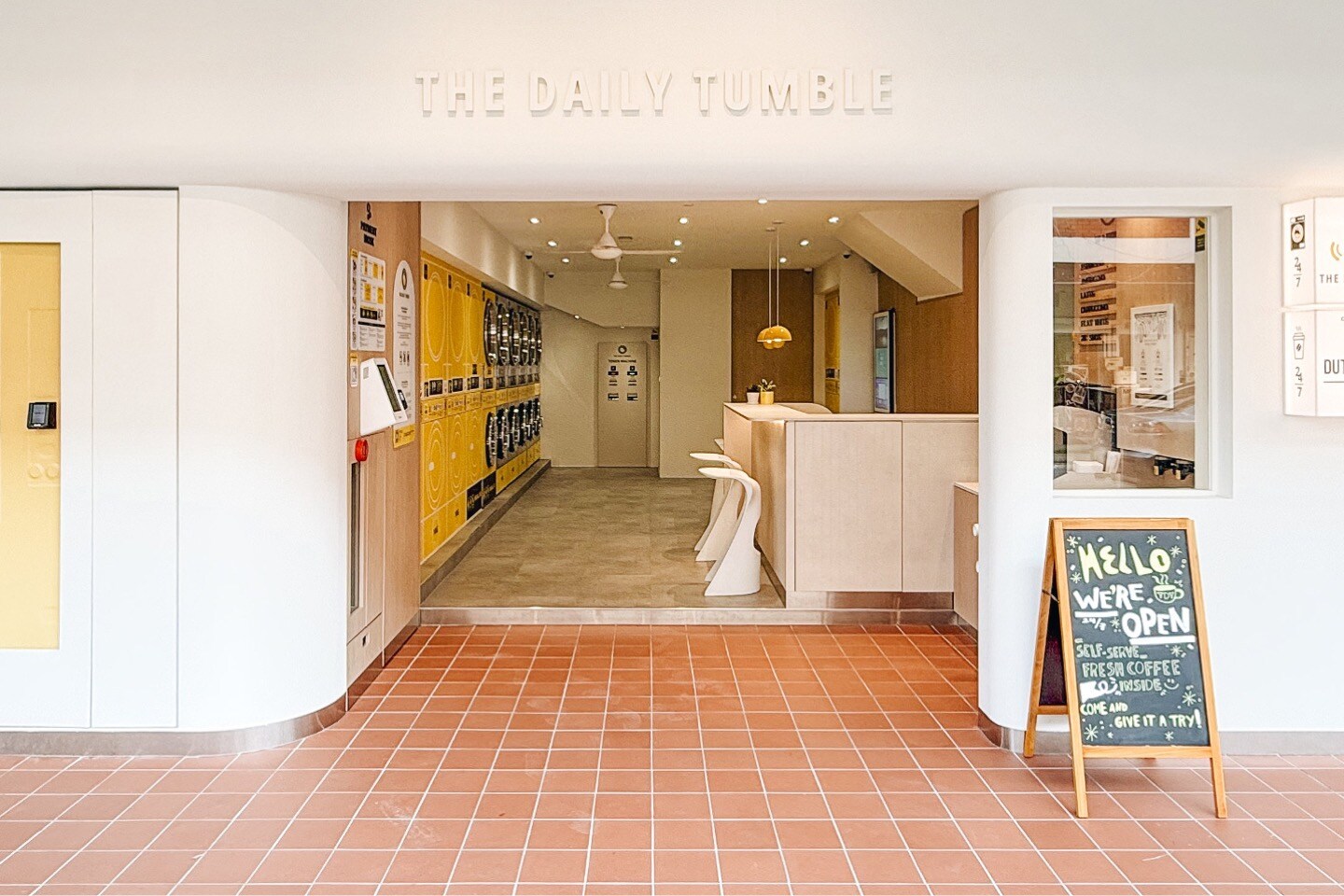
Hangout Laundry is part of a rising wave of modern laundromats in Singapore making laundry more convenient, comfortable and communal. Another establishment, The Daily Tumble, caters to pet owners with machines labeled “special care” for pet accessories. Patrons can sip kombucha, ginger beer or specialty coffee at the on-site self-service café while they wait. Meanwhile, aviation-themed The Good Husband Laundromats and Drycleaners reinvents the laundry experience with massage chairs, an Instachef meal vending machine and even a pop-up barber.

While demand is partly driven by practical needs — compact homes, lack of drying space and busy households — this wave reflects something deeper: a return to community-first local businesses. Beyond meeting a functional need, these laundromats are serving as third spaces — reviving the communal spirit by turning routine errands into opportunities for connection. In turn, consumers develop a sense of ownership over the spaces and chip in to do their part to make the experience better for everyone. At Hangout Laundry, patrons often voluntarily help newcomers and keep the space tidy. At the Daily Tumble, visitors contribute to a mini library of kids’ books.

The shift toward supporting local, which sparked during the pandemic, has endured. Today, local businesses are evolving into community hubs, where practical benefits meet organic connections. What opportunities exist for your brand to create similar urban oases? How might you foster a sense of ownership and connection within your brand’s existing physical spaces?


WIDESPREAD WELLNESS
24 March 2025

Sleep is no longer just a fundamental human need anymore — it’s the path to peak self-actualization, with REM cycles the new wellness frontier. IKEA’s extensive global sleep study, IKEA Sleep uncovered, surveyed over 55,000 people across 57 markets, exposing how sleep deprivation, inequality and tech habits are fueling the sleep economy:

⏳ Sleep shortage: People globally sleep 1 hour and 20 minutes less than they aim for — that’s 20+ full days of lost 💤 per year.

🌍 Sleep inequality: Mainland China leads in sleep quality, while Norway snoozes at the bottom of countries surveyed. The US? Second to last — coinciding with its lowest-ever global happiness ranking.

😴 Hypersomnia rising? 28% rate their sleep quality as poor, 19% wake up more than twice a night and 18% wake up tired nearly every day.

🛌 Snooze over schmooze: 70% of people rank sleep as one of life’s greatest joys — climbing to 74% among 18-24-year-olds. Over half (58%) even prefer staying in and snoozing to going out.

😰 Stress and financial anxiety: Anxiety and overthinking rob 40% of people of shuteye. Among financially insecure people, 27% wake up multiple times per night — above the global average (19%).

📱 Bad screentime: 72% use their phones in bed — spiking to 86% for 18-24-year-olds, the group most worried about sleep. Laptops (24%) and TVs (39%) are also used in bed.

Coinciding with 2025’s sleep awareness month, IKEA is going full REM. Here’s the brand highlight: 

🛋️ Design your sleep while you sleep: IKEA and MRM Madrid flip sleep tracking into shopping — analyzing your nighttime behavior to serve up personalized, shopable sleep solutions. Dive into more SENSESCAPING innovations to create a tech-driven sleep sanctuary. 

🔦 Sleepless lamp: In Canada, IKEA’s emotional installation flickers to mimic the fragmented sleep patterns of nearly 500,000 sleep-deprived children. In 2025, every brand is a healthcare brand — how will you prove your BRANDCARE value

📲 ‘u up?’ stunt: Late at night, IKEA Canada slid into loyalty members’ DMs, turning the iconic ‘u up?’ text into mattress discounts. With people spending almost 40 minutes on their phones before bed, how can you help late-night scrollers build better bedtime habits?

VILLAGE SQUARED
21 March 2025

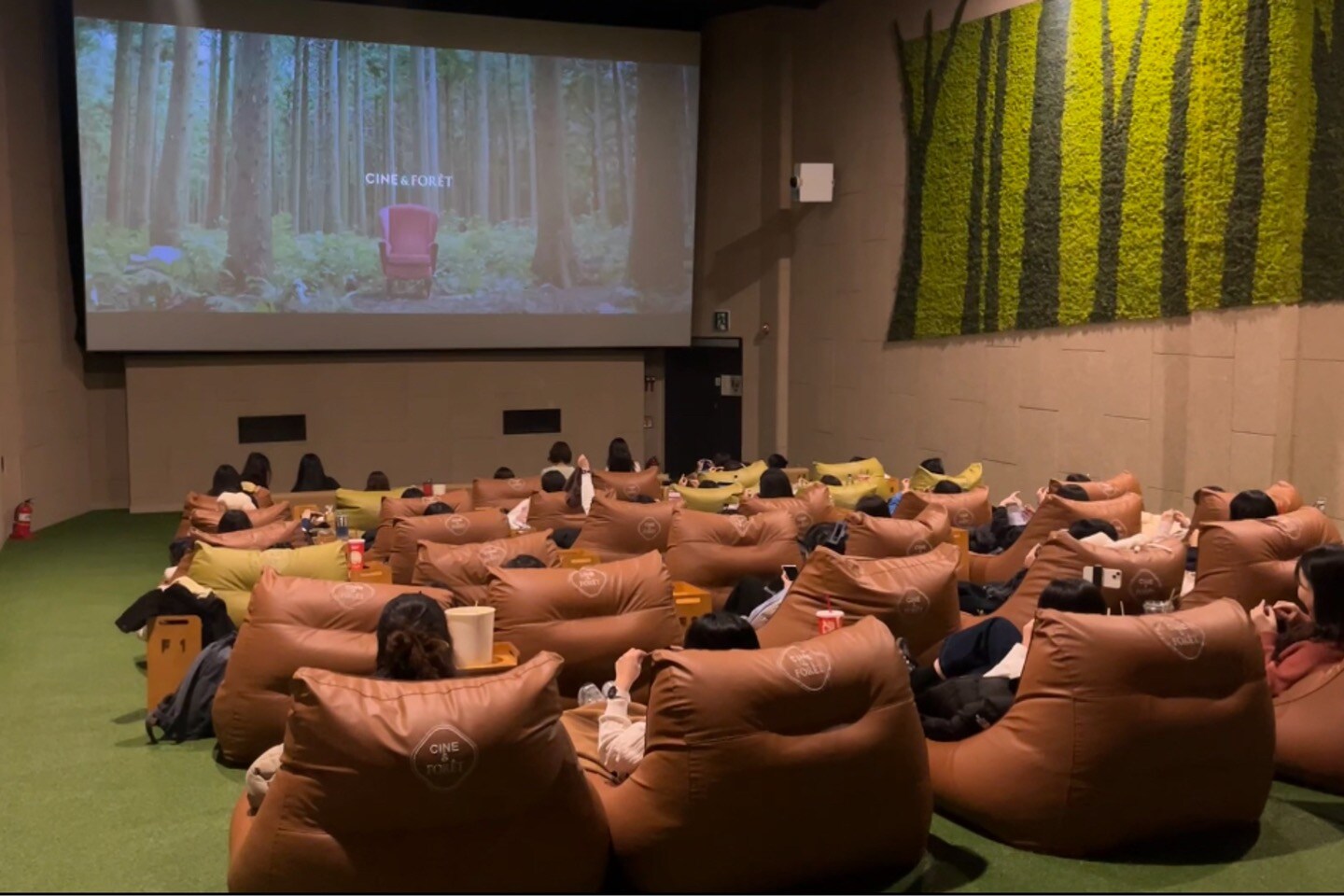
South Korean movie theater chain CGV is introducing monthly knitting screenings, allowing audiences to knit while watching films. The initiative follows a sold-out pilot event in January, where the theater screened Little Forest with adjusted lighting to accommodate knitters. Encouraged by positive feedback, CGV has scheduled these screenings for the last Thursday of each month and expanded it to 10 theaters nationwide, including five outside Seoul. By transforming knitting from a solitary hobby into a shared experience, CGV aims to revitalize theater-going and attract a more diverse audience. 

Five years after the onset of COVID-19, cinema audience behaviors have permanently changed and movie theaters are still struggling to recover. Streaming has reshaped viewing habits, and some films are now skipping the box office entirely. Meanwhile, the film industry's overreliance on franchises and reboots has left audiences disengaged — fewer films feel truly made for the big screen, and most viewers now reserve theater visits for major blockbusters. What was once a casual outing has become an event-based experience.

To compete with the cost savings, convenience and comforts of at-home streaming, theaters must offer value compelling enough to break consumer inertia. CGV is leaning into novelty and community. By tapping into the rising popularity of knitting, the company allows consumers to enjoy their passion point in a new way while repositioning the movie-going experience. Prior to CGV's initiative, similar knitting screenings had been held by Leica Cinema in South Korea, as well as other movie theaters in Austria and Sweden.

Beyond the movie industry, there's a lesson here for all brands around adapting to stay relevant amidst shifting consumer preferences. How can your brand continue to reshape its offerings around existing consumer habits, rather than forcing audiences to fit into your existing services?

AFTERMATH
17 March 2025

COVID-19 turns five this year. Yep, it's been that long. While 1-in-8 people continue to battle long COVID symptoms, the world has stumbled straight from lockdowns into a dizzying poly-crisis — and now, Trump's chaos economy. Bottom line? 'Normal' isn't coming back anytime soon, and it certainly doesn't feel like it for many. Public satisfaction with healthcare systems has hit rock bottom. And among the hardest hit? Young people.

The pandemic didn't just disrupt Gen Z's schooling, social lives and early careers — it permanently rewired their outlook on life. Edelman's latest report paints a sobering picture of 18-34-year-olds:

😞 Mental health SOS: 61% feel deep financial anxiety, 58% report loneliness and isolation, and 53% battle depression and anxiety — all directly tied to the pandemic

💔 Social fabric unraveling: 51% have lost faith in their country's ability to unite in future crises, signaling rising mistrust and disconnection

👶 Pandemic babies to no babies: 1-in-4 will opt out of parenthood because of the pandemic — with country-specific figures ranging from 21% in the UK to 36% in India

Your move? Brands, policymakers, and communities now have a window of opportunity: transforming generational grievances into growth. How will you champion mental health? Foster authentic social connection? Or support young people navigating adulthood in an uncertain world?

NEW LABOR
10 March 2025

The four-day workweek debate may have peaked in 2022, but the practice is slowly gaining traction:

🇦🇺 2-in-3 workers can now swap public holidays

🇪🇸 The government is reducing the legal workweek to 37.5 hours

🇬🇧 200+ companies have permanently adopted a four-day workweek with no pay cuts, benefiting more than 5,000 employees

According to the 4 Day Week Foundation, many of these firms, especially in tech, marketing and the nonprofit sector, report higher productivity, happier teams and even increased profits. And shorter workweeks align with workers' needs and wants — for the first time, work-life balance now ranks higher than salary in importance (83% vs. 82%, per Workmonitor).

So, could your company take a bold leap? In an era of FOBO (Fear of Becoming Obsolete), could help from AI and smarter perks double your workforce’s impact? Even if a four-day week isn’t in the cards (yet 😉), how can you offer flexibility to show employees you truly value their wellbeing beyond ping-pong tables and free coffee? 🏓☕

STATE OF PLACE
7 March 2025

As geopolitical tensions intensify following president Trump's return to power, European shoppers are looking to support products from their own continent. Three signals of a larger movement:

⭐️ Danish retail giant Salling Group is introducing a new labeling system across its Bilka, føtex and Netto stores. Starting this month, electronic price tags will feature a small star indicating European-owned brands. The company emphasized that while they will continue to stock products from around the world, the star simply offers "an extra service for customers who wish to buy products from European brands."

salling-star

🛒 Created on 16 February 2025, the Reddit community r/BuyFromEU already has over 122,000 members dedicated to supporting European-made goods and services. The forum serves as a hub for consumers looking to discover locally produced fashion, technology and food, with solidarity with Ukraine playing a significant role, alongside resistance to the Trump administration's policies.

🚗 Unsurprisingly, given Elon Musk's role in the new US government, the automotive sector is also affected. In January 2025, the Volkswagen ID.4 overtook Tesla's Model Y to become Europe's best-selling electric vehicle, with registrations surging 195%. While part of Tesla's 46% sales drop may be attributed to anticipation of a new model, analysts also point to "the declining popularity of Tesla in Europe overall." European manufacturers are capitalizing on this sentiment, with Volkswagen's ID.7 securing third place and Skoda's Enyaq rounding out the top five best-selling EVs.

Read on for our trend take
SOCIAL FABRICS
3 March 2025

The 7th annual CX report from Zendesk is in! A global survey across 22 countries reveals five key trends shaping the AI-powered future of CX:

1️⃣ Autonomous service accelerates: 90% of companies report positive ROI from AI-driven agent tools
2️⃣ Trust in AI depends on personality: 64% of consumers are more comfortable with AI that’s engaging and human-like
3️⃣ Personal AI assistants take the wheel: 67% are eager to hand off customer service tasks to AI
4️⃣ Voice AI is turning up the volume: 51% have interacted with it, 60% want brands to adopt it and 67% believe more natural-sounding AI would enhance experiences
5️⃣ Personalization is the loyalty play: 61% now expect AI-powered, hyper-personalized service

🗣️ Let’s talk Voice AI. Your brand has likely implemented its first text-based LLM — yet 90% of CX business trendsetters say voice-driven interactions are the future. And while Alexa and Siri still fumble, conversational AI is continuously raising consumer expectations. No surprise — people spend hours talking to ChatGPT, sometimes more candidly than with their therapists. A recent study confirms it: lower AI literacy increases receptivity, meaning many engage with AI without hesitation. At this point, LLMs might know more about consumers than most insight teams. 😉

💬 So, forget bots that simply react — voice-based LLMs can initiate, anticipate and engage in real conversations. This shift unlocks vast opportunities, but it also demands responsibility. Trust isn’t just about AI sounding human — it’s about knowing how, where and when to use it. So, where does Voice AI fit into your brand’s consumer journey?

🔊 And just as importantly, where do people still need — and even crave — human interaction to build true human-to-human connections, not bot-to-human ones? With digital-first everything, how can your brand act as a stepping stone to help people bridge the gap between online comfort and face-to-face confidence? 

BEYOND WORDS
24 February 2025

Screen time limits? Gen Alpha says game over! Gen Alpha is spending 4+ hours a day on mobile devices, and they’re not just scrolling and gaming — they’re shopping. From in-app purchases to BNPL and social commerce, digital spending has become second nature to the youngest consumer cohort. But as screen time surges, so do concerns about digital dependence and unchecked spending. A new Qustodio report, analyzing data from 400,000 households across the US, UK, France, Spain and Australia, reveals how young users (ages 4-18) are reshaping the digital economy:

🎮 Roblox takes two crowns: the most-played and most-blocked app of 2024. Kids now spend an average of 139 minutes per day on Roblox, 9 minutes more than last year. While the platform has introduced more safety measures, its business model still thrives on in-app monetization, with some virtual items hitting jaw-dropping prices — like USD 20K for a necklace. 💎

💰 Gen Alpha isn’t logging off, and brands are cashing in; Alpha’s spending power is set to hit USD 5.5 trillion by 2029. With the oldest Alphas turning 15 in 2025, brands must rethink their strategies — marketing not just to millennial parents but also to pre-teen shoppers migrating from Roblox to TikTok and beyond. These young consumers are shaping the future of commerce, and their loyalty resides in virtual worlds where they can create, play and socialize. And interact with brands like Purina, which promotes virtual pet fostering as part of its engagement strategy. 🐶

💡 As Gen Alpha’s screen time and spending power continue to rise, ask yourself: is your customer journey Gen Alpha-proof? From product discovery to aftercare, how will your brand connect and co-create with Robloxians?

SWAPPORTUNITIES
21 February 2025

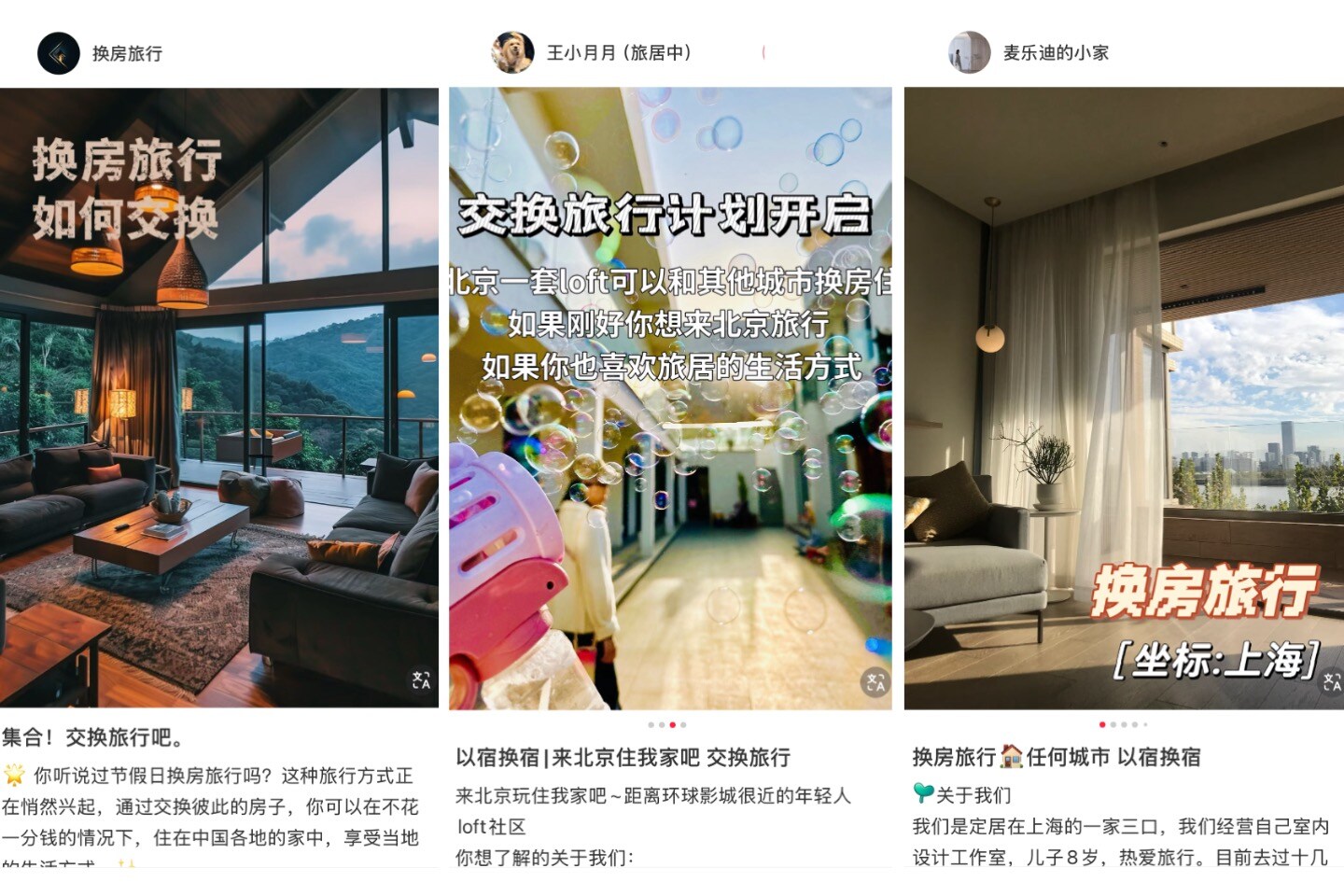
Spring Festival, the holiday period around Chinese New Year, has always been China’s busiest travel season. Millions journey home for family reunions or take advantage of the extended break for leisure trips. In 2025, the festive season saw a record 2.3 billion trips, with travelers collectively spending RMB 677 billion (USD 94 billion) on tourism and leisure. Amidst the holiday surge, savvy travelers looking to avoid peak season hotel costs are turning towards a community-driven, wallet-friendly alternative: house-swapping.

The movement started as an informal social exchange on Xiaohongshu (Red Note) and first gained traction around Spring Festival last year. Since then, new platforms have cropped up to serve as formal marketplaces, such as the House Exchange App (换房APP) or House Swap Travel (换房旅游). Users can upload or browse listings, chat with potential swap partners, pay safety deposits and finalize agreements via the app. The platforms also provide a safety net by vetting all users through identity verification, property certificates and facial recognition.

House swapping isn’t a new concept, of course, but it’s enjoying a surge in popularity. HomeExchange, the biggest industry player globally, reported a 51% membership growth in 2024. Drivers for that growth? Hotels from Shanghai to San Francisco increasingly look the same while prices continue to climb in response to heightened demand. Meanwhile, influencers tout the same handful of TikTok-viral, must-go spots. In response, travelers looking to save money while searching for more authentic travel experiences are turning to local communities for unfiltered alternatives.

Beyond the obvious economic benefits, there’s a sense of adventure in connecting with a stranger to swap homes and exchange local tips, a direct antithesis to the algorithmic experience of booking yet another hotel chain and scrolling social media for travel recommendations. Some Chinese house-swapping platforms are gamifying the process, too. Good community behavior — such as maintaining a detailed listing or uploading local tips — is incentivized through platform currencies that can be used to offset the cost of future bookings.

Could your brand benefit from fostering a barter community? Which segment of your audience would be most eager to join?

Locked out
17 February 2025

From London to Istanbul to Sydney, rents are skyrocketing while homeownership drifts further out of reach. For most Gen Z and Millennials, buying a first home remains a distant dream. A recent Zillow report confirms the struggle: single-family home rents in the US are up 41% since pre-pandemic times, while multifamily rents have jumped 26%.

Ipsos' latest Housing Monitor provides a deep dive into global sentiment across 30 countries:

📉 71% of respondents believe that even with hard work and good jobs, young people today will struggle to find suitable housing

🏠 70% of under-35s say it's harder for their generation to buy or rent a home than it was for their parents, though 64% of older respondents (60-74) also find it's more challenging to buy a home than before, showing it's a cross-generational concern

📈 67% expect house prices to climb in the next year, and 71% predict rising rents

💸 37% already worry about making rent or mortgage payments (rising to 57% in Turkey), and nearly the same number fear affordability will worsen over the next year

It's time to ditch outdated stereotypes. Younger generations don't just crave freedom and flexibility; they want stability and security, too. Which milestones are your youthful stakeholders chasing? Whether it's a sabbatical or a starter home, how could you help them get there?

From tokenized homeownership and intergenerational co-living to financial literacy boosts — there's room for innovation. Will your brand be part of the solution?

HUMANIFESTO
10 February 2025

AI is disrupting everything, but in the rush to automate, brands risk losing their human touch. Enter HUMANIFESTO — a new wave of authenticity pushing back against AI-generated polish. Not the carefully curated ‘realness’ of the past decade, but something raw, messy and unmistakably human. Because in a world of machine-made content, what stands out is what AI can’t replicate.

VML’s recently published The Future 100: 2025 backs this up: 82% of global consumers prefer advertising that’s humble, while 37% crave more fun and laughter (compared to just 23% who seek excitement). True humor thrives in shared experiences and cultural nuance — a territory where AI still can’t compete. Case in point: AI-generated ads tried to steal the show during the Super Bowl 🏈, yet all anyone’s talking about is Kendrick Lamar’s halftime performance. 🎤

As synthetic content floods digital feeds, brands face a defining moment: how will you prove that real still matters? Beyond campaigns and content, how will your brand verify and value authentic human interaction?

PRECAREIOUS
3 February 2025

GlobeScan's The Road to 2025 surveyed 30,000+ consumers across 31 markets, mapping their sustainability mindsets. Turns out, not everyone is on the same eco journey. The study segments consumers into four distinct groups — let’s break them down:

🔵 Anxious Inactives (28%): They care about the planet but feel powerless, stuck in a loop of eco-guilt and inaction.
🇩🇪 Could your brand make sustainability feel effortless? Consider Puma’s podcast series, helping young consumers navigate green choices with less anxiety.

🟠 Indifferents (27%): Sustainability? Meh. They’re not engaged unless there’s a clear what’s-in-it-for-me factor.
🇸🇬 Hook them with incentives — like FairPrice x HPB’s in-app rewards for healthier purchases.

🟢 Enthusiasts (23%): Eco-warriors on a mission, slightly overrepresented in emerging markets. They actively seek out sustainable solutions.
🇬🇧 Give them the tools to level up. Take cues from Zero’s banking app, which breaks down spending’s environmental impact.

🟣 Minimalists (22%): Less is more. Minimalists prioritize reducing consumption and favor mindful living, particularly in Europe and North America.
🇳🇱 Show them less stuff, more impact — like Dutch plant retailer Sprinklr’s extra days off for employees who skip flights.

💡 Your takeaway? Sustainable behaviors aren’t one-size-fits-all. Brands need to tailor their approach to match these distinct mindsets. Could you segment your customers the same way?

🎯 Extra challenge? 20% still think healthy living means self-denial and 23% say the same about sustainability. Time to flip the script! Sustainability isn’t about sacrifice — it’s about joy, purpose, community and even saving money. Could your brand make green living feel like the ultimate life upgrade? 🌱✨

PRECAREIOUS
27 January 2025

Edelman’s annual trust check-in is here, surveying 33,000+ people across 28 countries. The verdict? Grievance is widespread, trust is fragile and optimism is scarce. Here’s your cheat sheet to the 78-page Edelman Trust Barometer:

🚨 Grievance overload: 61% of respondents feel excluded, unheard and underserved, believing government and business primarily benefit the wealthy and powerful. In 23 of 26 countries, the majority report moderate to high grievance, showing the social contract is at risk. Those with high grievances are twice as likely to adopt a zero-sum mindset — what helps others hurts me.

🔥 Hostile activism normalized: 40% now view hostile activism (yes, even violence and disinformation) as a valid way to demand change. The most radical? Gen Z and Millennials, with 53% endorsing such tactics.

🤥 Leaders lie: 69% believe government officials, CEOs and journalists intentionally mislead the public with falsehoods or exaggerations — up 11-12% since 2021.

😟 Prejudice panic: 63% fear discrimination, racism or prejudice — a sharp 10-point jump in just one year, with double-digit increases recorded in 15 of 28 countries. The largest spike? White respondents in the US... 🤔

📉 Fading hope: Only 36% believe life will improve for the next generation. In wealthier countries, that drops to just one in five.

So, what now? Businesses can no longer afford to sit on the sidelines. Tangible action — not authority — is the true currency of trust. High-grievance individuals feel companies aren’t doing enough in key areas: affordability (64%), climate action (62%), retraining (56%), tackling misinformation (55%) and addressing discrimination (53%). Are you? 👀

Amid rising discourse and division, the opportunity lies in fostering inclusion and benevolence. Address inequality authentically, support grassroots change, and offer a brighter vision of tomorrow. A hopeful future may be people’s last lifeline. ✨

Autonomy vs AI
20 January 2025

OpenAI’s Tasks beta for ChatGPT now allows paying users to schedule reminders and recurring actions, from daily weather updates to birthday reminders. Accessible through the 'GPT-4 with scheduled tasks' option, notifications sync seamlessly across web, desktop and mobile. With task management available via chat threads or a dedicated section, ChatGPT is evolving into a powerful personal project manager, competing with Siri and Google Assistant — and bringing agentic AI to the consumer space.

⚠️ But as The Guardian reported, this convenience comes with complexities. OpenAI’s rumored Operator agent, expected soon, will handle more advanced actions, like fully autonomous travel bookings. ✈️ Such advancements will fuel the rise of the intention economy, where AI moves from capturing attention to influencing decisions — and potentially selling those decisions to the highest bidder.

🔮 Research from the University of Cambridge warns that AI assistants may steer preferences, from which hotels are booked to which political candidates are endorsed, raising urgent ethical concerns around privacy and autonomy. As Dr. Jonnie Penn cautions: "Without regulation, this will be a gold rush for those who target and sell human intentions."

💡 Why it matters: The intention economy has the potential to disrupt industries from marketing and politics. Success will depend on businesses acting as trusted, transparent partners, offering AI solutions that empower users rather than manipulate them. The question isn’t whether AI will shape decisions, but how. And who will lead this transformation responsibly.

JOYNING
17 January 2025

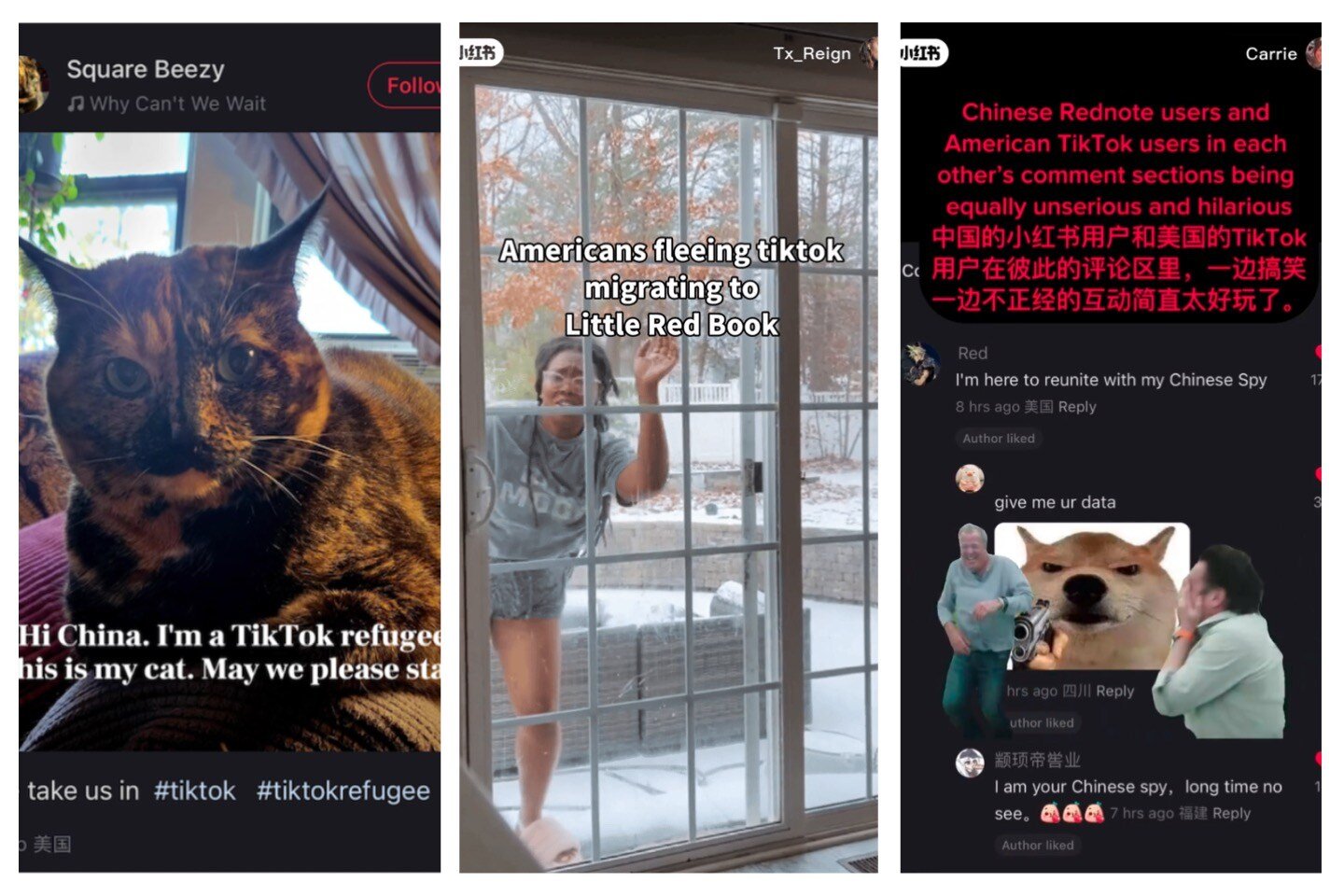
Barring a last-minute reversal, the US Supreme Court’s ruling to effectively ban TikTok will kick in on Sunday, January 19th. In anticipation, American TikTok users seeking an alternative are flooding the Chinese social media app Xiao Hong Shu, now known as ‘Red Note’ in English. Dubbing themselves ‘TikTok Refugees,’ these users are treating the switch as a statement of defiance against the ban.

As of Thursday, January 16th, Xiao Hong Shu became the number one most-downloaded app on the US Apple App Store, overtaking Lemon8 and ChatGPT. The hashtag #tiktokrefugee saw rapid growth on the app, jumping from 2,000 to 77,000 posts in a day, with total views booming from 390,000 to 38 million.

Notably, Xiao Hong Shu does not have a built-in translation feature, so users mostly rely on machine translation to navigate the platform. Hilarity ensues, with Chinese and American users engaging in playful cultural exchanges — helping each other with English and Math homework, swapping pet photos, and hosting ‘Ask Me Anything’ sessions.

Brands are also joining in. B’in Music, the label behind the wildly popular Mandarin rock band Mayday, posted a machine-translated English note welcoming Americans and promoting the band’s upcoming tour stop in Las Vegas. Meanwhile, Duolingo, which reported a 216% jump in US users learning Chinese this week, joked, “Oh, so now you’re learning Mandarin” on X.

The multiple ironies here are worth mentioning. Most blatantly, Americans flocking to another Chinese social media app seemingly undermines the national security rationale behind the original TikTok ban. More subtly, perhaps, is that a new generation of Americans is joining an app whose name — translating to ‘Little Red Book’ — references ‘Quotations from Chairman Mao Zedong’, a Cultural Revolution-era book compiling the former CCP chairman’s sayings.

Beyond these incongruities, however, TikTok Refugees are a reminder of the positive power of social media, which has taken a back seat to the more prominent discourse around polarization and brain rot. Chinese and American internet users are openly interacting, most of them for the first time. Amid rising global tensions, these impromptu connections underscore that people are more than their (government’s) politics. Regardless of perceived differences, we all struggle with homework and fawn over cute cats.

Back to Top