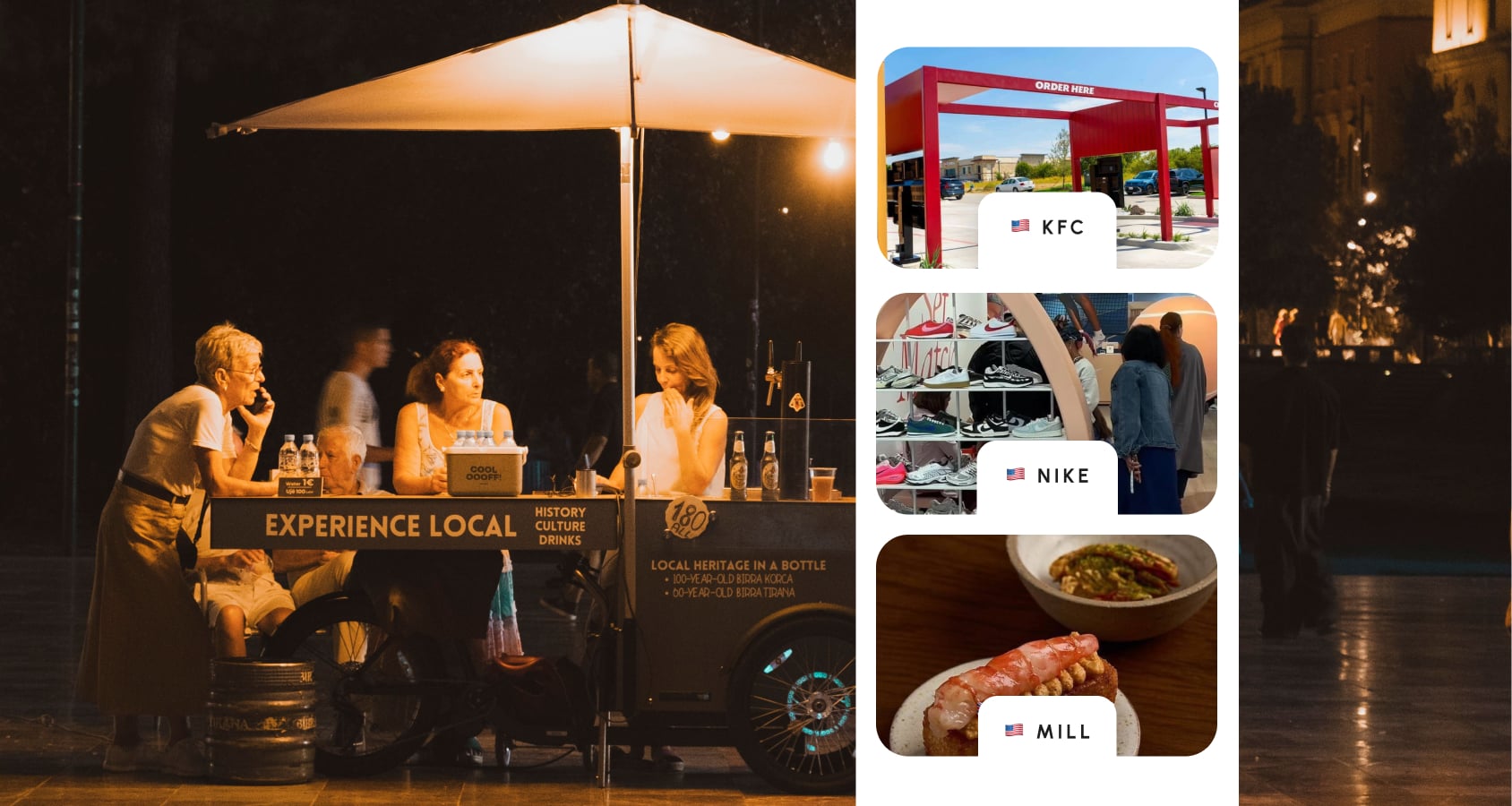
A single restaurant, a temporary store and a themed dining week give businesses a limited setting in which to test or demonstrate a broader strategy. KFC, Nike and Mill are using physical experiences to show how operational and sustainability ideas work in practice before deciding what comes next.
KFC opened Open House, a redesigned restaurant concept in McKinney, Texas. The location combines midcentury styling with a streamlined kitchen and a larger dine-in area. KFC is treating it as a trial, using one restaurant to assess the format before considering a wider US rollout.
Nike opened a temporary Manhattan store that brought trade-in, vintage resale, repair, cleaning and recycling services together in one place. The pop-up gave shoppers a direct way to participate in the company’s circular initiatives rather than encounter them separately or read about them in a sustainability report.
Food-recycling company Mill organised Make Food Not Waste Restaurant Week across New York. Participating restaurants created special menus using ingredients that might otherwise have been discarded. The event turned food-waste reduction into something diners could experience through an ordinary restaurant visit.
Select your country
- Argentina
- Australia
- Austria
- Belgium
- Brazil
- Cambodia
- Canada
- Chile
- China
- Colombia
- Costa Rica
- Croatia
- Czechia
- Denmark
- Estonia
- Finland
- France
- Germany
- Ghana
- Greece
- Guatemala
- Hong Kong
- Hungary
- Iceland
- India
- Indonesia
- Ireland
- Israel
- Italy
- Japan
- Kenya
- Latvia
- Lithuania
- Malaysia
- Mexico
- Morocco
- Netherlands
- Nigeria
- Norway
- NZ
- Paraguay
- Phillippines
- Poland
- Portugal
- Puerto Rico
- Romania
- Serbia
- Singapore
- Slovakia
- Slovenia
- South Africa
- South Korea
- Spain
- Sweden
- Switzerland
- Taiwan
- Thailand
- Turkey
- UAE
- UK
- Ukraine
- US
- Uruguay
- Venezuela
- Vietnam
Select your country
- Argentina
- Australia
- Austria
- Belgium
- Brazil
- Cambodia
- Canada
- Chile
- China
- Colombia
- Costa Rica
- Croatia
- Czechia
- Denmark
- Estonia
- Finland
- France
- Germany
- Ghana
- Greece
- Guatemala
- Hong Kong
- Hungary
- Iceland
- India
- Indonesia
- Ireland
- Israel
- Italy
- Japan
- Kenya
- Latvia
- Lithuania
- Malaysia
- Mexico
- Morocco
- Netherlands
- Nigeria
- Norway
- NZ
- Paraguay
- Phillippines
- Poland
- Portugal
- Puerto Rico
- Romania
- Serbia
- Singapore
- Slovakia
- Slovenia
- South Africa
- South Korea
- Spain
- Sweden
- Switzerland
- Taiwan
- Thailand
- Turkey
- UAE
- UK
- Ukraine
- US
- Uruguay
- Venezuela
- Vietnam