DELIBERATE DEVICE FRICTION
12 August 2026

A counter-signal is building inside consumer tech. Products and features are now designed to make engaging with devices harder. This is happening as screen fatigue becomes a mainstream complaint rather than a niche one.

FTLO Travel now bans cell phones entirely on its organized tours, a policy applied across all its trips. The company frames this as a wellness and cultural-presence feature, arguing travelers engage more with a destination when a screen isn't mediating the experience.

Firefox has released a multi-account container extension that separates personal and work profiles inside a single browser window using color-coded tabs. Rather than requiring separate browsers or logins, the tool builds visible friction directly into the interface so switching contexts becomes a deliberate act.

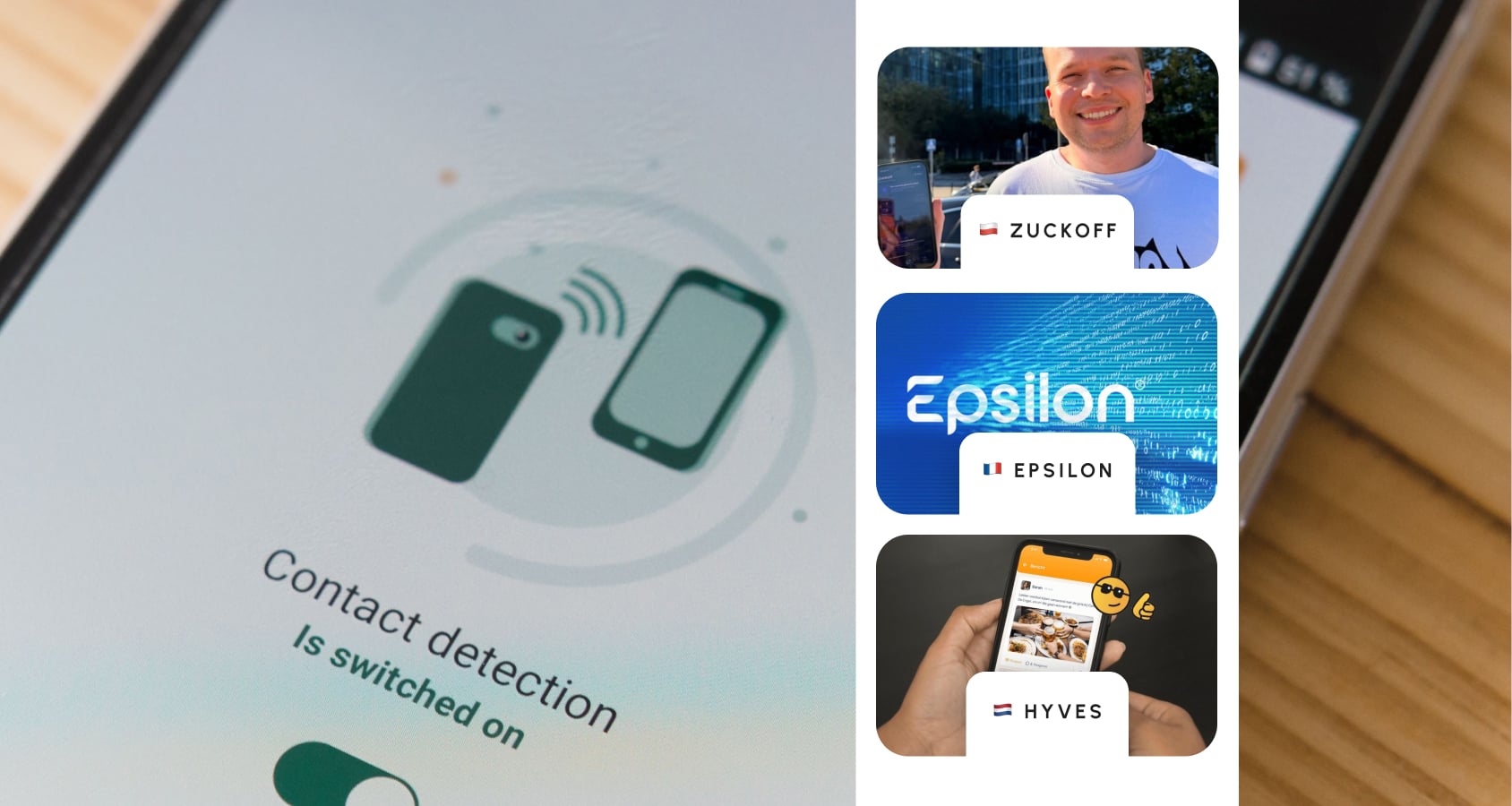
Autonomous, based in North America, sells a $9 physical NFC key that locks distracting apps on a phone. Reopening a locked app requires tapping the key against the device again, converting a one-tap unlock into a deliberate physical ritual.

TREND BITE
None of these organizations are rejecting technology. FTLO Travel, Firefox and Autonomous limit selected functions to give consumers more control over when and how they use technology.


Daily is TrendWatching’s free feed of innovations, trends and insights, selected by our analysts.

So youcan create meaningful innovations of your own❤️Want to receive a weekly dose of inspiration?

Subscribe now!

image 18
Talk to us
Be sure to ping our editor, Liesbeth, if you’re working on something new and exciting that Daily should feature.
AGENTIC BANKING
11 August 2026

Financial institutions are moving away from the app-as-menu model. Three moves across Asia and Latin America show banks and payment providers replacing tap-driven interfaces with AI agents that execute tasks.

DBS upgraded its AI assistants with generative and agentic capabilities, extending the update to more than 10 million customers across Singapore, Hong Kong, and Taiwan. The assistants now handle real banking tasks conversationally, moving past simple Q&A into execution.

Itaú, Brazil's largest private bank, launched two overlapping AI products in the same week: a conversational AI assistant and a full generative assistant called ia.i. Both let customers check balances, make Pix transfers, and analyze spending through natural language — typed, spoken, or submitted as an image.

Cielo, one of Latin America's largest payment processors, integrated an AI shopping assistant directly into its payment gateway. The entire e-commerce journey — from product search to final checkout — completes inside a single chat interface, with no separate cart page or app switch.

TREND BITE
Banking agents now transfer money, analyze spending and complete purchases through natural-language instructions. DBS, Itaú and Cielo have introduced these functions across banking and payment services.

This is the bonus promo that when activated will appear first on the page. This is the bonus promo that when activated will appear first on the page. This is the bonus promo that when activated...
INTELLIGENT MICROMOBILITY
10 August 2026

Two-wheeled urban transport is adding software and safety features that address specific barriers. Heat, road hazards, balance and storage keep some riders from using bikes and scooters. MUJI, Ather Energy, Veo and Flatbike address these barriers directly.

MUJI launched a ventilated bicycle helmet co-developed with a beauty vocational school and academic partners, paired with a matching 20-inch bicycle. The design addresses the two most common reasons everyday riders skip helmets: overheating and hair disruption. MUJI collaborated with a beauty school to develop the helmet. 

Ather Energy deployed a pothole and road hazard alert system across its electric scooter fleet in Asia Pacific, using connected data from other riders. The more people ride, the smarter the warnings get. It turns a fleet of individual scooters into a shared sensing network.

Veo launched North America's first shared electric trike, designed specifically for riders who cannot balance on two-wheeled vehicles. Flatbike developed removable pedals and a rotatable stem that compresses a full-size bicycle to one-third its size for indoor storage.

TREND BITE
MUJI, Ather Energy, and Veo focused on friction removal. Each brand identified a single, specific barrier stopping a specific group from choosing a bike or scooter over a car, then designed precisely against it. For cities, mobility operators, and product designers, the opportunity is to run the same exercise on their own fleets, products, or services. 

SOFT INFRASTRUCTURE
7 August 2026

Municipal governments are using infrastructure residents already visit, such as convenience stores, seasonal shelters and neighborhood streets, to deliver care and public services.

Busan Metropolitan City designated 48 24-hour convenience stores across the city as free rest shelters for delivery riders and mobile outdoor workers during extreme heat. Workers can step inside, cool down, and rehydrate at no cost. No new buildings — existing retail, repurposed with a sign and a policy.

Barcelona City Council opened a seasonal day shelter offering climate-controlled space, hydration stations, and social support for unhoused residents during summer heat waves. It runs every summer, rather than activating only when the city declares an emergency.

Gangnam District Office in Seoul partnered dog owners with their pets to collect litter during routine neighborhood walks. Participants receive simple collection tools and recognition for their contribution.

TREND BITE
Governments are shifting care from dedicated facilities into everyday infrastructure. This opens up avenues for brands to collaborate with governments on to use their assets to serve local communities.


SPORT UNBOUND
6 August 2026

Sports content is being rebuilt for audiences who consume entertainment in vertical feeds and 30-second windows. Rights holders, venues and brands are creating new formats, removing friction and giving fans roles as builders and participants.

Johan Cruijff ArenA in Amsterdam opened an AI-powered cashierless bar. Smartphone wallets and tracking technology let visitors take a drink without queuing or checking out, reducing the time spent away from the match. The model adapts Amazon's Just Walk Out system to a stadium concourse.

Delta Airlines partnered with DraftKings on a free, skill-based sports prediction game for its flights. Passengers compete for gift cards without gambling mechanics. The game gives passengers a sports activity during the flight and does not require Wi-Fi.

Live Nation launched a tycoon-style game on Roblox where players design and manage their own virtual music festivals, with real-world artist lineups and brand partnerships built into the gameplay. Rather than advertising festivals to Roblox's young audience, Live Nation lets them run one. Players become promoters years before they'd attend a real show.

Trend bite
Sports and live entertainment go to the audience rather than the audience going to them. A stadium concourse, a middle seat, a game engine: wherever the audience already spends time, the experience needs to be there too.

DAD ECONOMY
5 August 2026

Across retail, financial services and public policy, organisations are recognising involved fathers as a distinct customer segment with their own needs, behaviours and purchasing decisions.

Brazilian menswear brand Reserva partnered with child safety company Safety 1st to launch what it describes as Brazil's first dedicated paternity product collection. Introduced on 14 July, the range includes a baby carrier, stroller, paternity backpack and organiser bag, while Reserva reinforced the positioning internally by extending employee paternity leave to 45 days.

Dubai-based entrepreneurs launched Good Husband, an AI coaching app that helps men navigate difficult conversations with their partners. Powered by Anthropic's Claude, it offers private, real-time support for emotionally sensitive discussions, letting users choose a Warm or Direct tone (or their own voice) and switch on Coaching Mode to unpack the emotional dynamics behind different responses. A premium Better Husband tier builds a detailed relationship profile, tracking anniversaries and conflict patterns for more tailored advice.

UN Women, through its Dare to Care programme, is working with fathers across Jordan, Egypt and Morocco as part of its wider TransformCare initiative, now active in more than 50 countries. Supported by the governments of Sweden, Germany and Spain's Basque Country, the programme uses peer mentoring to encourage fathers to take a more active role in caregiving and household responsibilities, helping reshape family norms across generations.

The opportunity?

Many organisations still design for "parents" while unconsciously designing primarily for mothers. Revisit your customer journeys, product portfolio and communications through the lens of modern fatherhood.


WASTE COUTURE
4 August 2026

A growing number of brands are redesigning waste materials into premium collections and high-performance textiles, as regulation tightens and consumers demand stronger provenance.

Japanese fashion retailer Uniqlo launched Everyday Re.Imagined, a limited 10-piece-collection created with graduates from Central Saint Martins using returned AIRism T-shirts and damaged cotton garments collected through the brand's own take-back programme. The collection is available across 15 Re.Uniqlo Studios in London, Paris and Berlin.

Imperial College London designer Anthony Guevara developed PEEL, a biodegradable leather alternative made from discarded salak and lychee skins sourced in Indonesia. The fruit skins are dried, naturally treated for durability and hand-stitched onto biodegradable cotton muslin without synthetic binders. Early prototypes have remained stable for more than a year, while estimated carbon emissions are 95% lower than conventional leather.

Materials innovation company PANGAIA introduced (gaia)BioStretch, a performance fabric made with 72% bio-based nylon derived from non-food-grade industrial corn and an elastane blend that is approximately 70% plant-based. Its mint-based odour control remains effective through 20 home washes.

The opportunity?
Which returns, agricultural by-products and manufacturing offcuts will you turn into valuable sources of premium materials, distinctive product stories and resilient supply chains?

MATERIAL MEDICINE
3 August 2026

Brands are now engineering fabrics and biomaterials that actively influence circulation, protection, ageing and recovery, transforming everyday materials into health interventions.

Japanese recovery brand Refa Vitalwear, part of the MTG Group, introduced a premium Fall/Winter 2026–2027 sleepwear collection made from 73% silk blended with a proprietary fibre infused with eight natural minerals. Engineered to emit far-infrared rays that promote circulation during sleep, the collection is backed by planned pop-up stores and a flagship retail opening in 2027, signalling growing confidence in therapeutic apparel as a premium category.

Outdoor apparel brand Helly Hansen, through its Japanese partner Goldwin, expanded insect-repellent technology from specialist outdoor gear into everyday casual outerwear. The protective chemistry is permanently bonded into the fibres, eliminating the need for topical insect sprays. Similar approaches are now appearing in products from Columbia and L.L.Bean, suggesting biologically functional textiles are moving into the mainstream.

Haircare biotechnology company K18, now part of Unilever, launched its FutureIQ Biomimetic Hair Longevity Serum in the UK. Combining biomimetic peptides, antioxidants and a root-support complex, the serum targets the biological drivers of hair ageing rather than repairing visible damage. In a 90-day clinical study, participants retained up to 19,000 additional hairs while experiencing up to 70% fewer visible grey hairs, repositioning haircare as a preventive longevity category.

The opportunity?

Identify the biological stresses your customers face, from fatigue and heat to insects, ageing or poor sleep, and assess whether redesigning certain materials is an option.

MACHINE MENTORS
31 July 2026

Rather than removing people from the loop, the most commercially exciting robots are learning to observe, adapt to and make people more capable. Coaching, collaboration and caregiving are becoming core robotics capabilities.

Chinese robotics startup Pongbot launched Aura, a 7 kg backpack-sized AI coaching robot for tennis, pickleball and padel. Its detachable dual-camera system, Spotter, analyses every shot, delivers voice coaching, and automatically adjusts the next ball's speed, spin and placement to target weaknesses. The Kickstarter campaign raised nearly USD 4 million, highlighting strong demand for affordable AI coaching beyond clubs and professional academies.

Italian robotics company Generative Bionics unveiled Gene.01, a humanoid robot covered in full-body tactile skin that detects touch, temperature, proximity and force across its entire body. Human workers can teach the robot new tasks simply by physically demonstrating movements and grip pressure. Its first commercial deployment is with global shipbuilder Fincantieri, where Gene.01 will support complex welding operations alongside human workers.

Chinese robotics company Unitree released UnifoLM-OminiA-0.3, a unified AI model enabling a single humanoid robot to understand spoken commands while simultaneously reasoning about visual information and manipulating objects. In demonstrations, one robot sorted laundry, retrieved medicine, adjusted a hospital bed and immediately stopped mid-task when instructed—showing how a single AI architecture can support responsive assistance across multiple real-world scenarios.

The opportunity?

Whether your industry involves customers, employees or patients, the next competitive advantage may come from designing machines that continuously adapt to humans.

MOTIVATIONAL MECHANICS
30 July 2026

Across entertainment, retail and digital platforms, leading brands are identifying moments where consumers simply receive content, products or experiences, and then redesigning them into moments of participation. Instead of adding more features, they're creating mechanics that encourage people to create, play, personalise and return.

Nigerian nightlife startup ORB launched an all-in-one platform for Lagos that combines a real-time nightlife heatmap with in-app ticketing, table reservations, live social posts and a virtual drinks gifting system. A pre-launch event with GOAT Entertainment attracted around 300 attendees.

Dutch supermarket chain Lidl introduced Snackpret, a nationwide campaign distributing free blueprint cards that help children build edible animals and figures using five ingredients or fewer. The initiative responds to Wageningen University research showing only two in five Dutch children eat enough fruit and vegetables.

French music streaming platform Deezer launched Remix Lab, allowing fans to manually adjust tempo, genre and effects on licensed tracks by artists including Celine Dion and Ronisia. Every remix stream continues generating royalties for the original artists, while the best fan creations earn a place on dedicated Deezer playlists.

The opportunity:

Look for moments where customers simply consume your product, service or content: they increasingly represent untapped opportunities to introduce mechanics that encourage people to create, personalise, play, collaborate or share.

NARRATIVE ECOSYSTEMS
29 July 2026

Brands are moving from telling stories about a product to building story worlds that can generate products, partnerships and experiences for years to come.

Japanese creative collective NINJA BASKETBALL ANONYMOUS (May 2026) launched an NBA-sanctioned fictional universe where 16 ninja clans compete to unify feudal Japan through basketball rather than warfare. Built on regional history, ukiyo-e aesthetics and original typography inspired by ninja scholarship, the story world is designed to support products, licensing and future experiences.

Chinese game developer miHoYo (July 2026) released BSide: Olivia Lin, an AI companion app centred on a fictional Shanghai piano student. Users exchange personalised letters with Olivia and upload MIDI files that she performs through animated concerts. The app surpassed 100,000 Steam downloads during Early Access.

French augmented reality company BavAR[t] (December 2025–March 2027) partnered with SNCF and the French Ministry of Armed Forces to transform five railway stations into interactive historical worlds through 50 augmented reality points of interest, blending archival material, animation and location-based storytelling.

Could your brand still attract people if your current products disappeared tomorrow?


PROXIMITY INTELLIGENCE
28 July 2026

Every industry has places where national, city-wide or platform-level data becomes too coarse to act on.

These organizations are building products that combine hyperlocal sensing, community participation and AI into decision-making systems that are dramatically more useful than one-size-fits-all infrastructure:

Indian ecology research center Hume Centre for Ecology and Wildlife Biology built a landslide warning network in Kerala using 200 volunteer-operated rain gauges, enabling earlier, more precise evacuation decisions than broader state alerts.

Wildlife conservation nonprofit Polar Bears International, together with security company Spotter Global, developed Bear-dar: AI-powered radar panels that detect polar bears up to 1.2 km away, helping remote Arctic communities avoid dangerous encounters.

Hong Kong taxi payment startup DASH, with the Hong Kong University of Science and Technology, is building StreetSights, an AI platform forecasting passenger demand with up to 90% accuracy, giving independent taxi drivers intelligence previously reserved for ride-hailing platforms.

Where in your industry does "local" beat "central"?

Keen to access all our trends, insights and innovations? Check out Amplify, our Trend Intelligence Platform 💥
SENSORY DECODING
27 July 2026

For the next generation of diagnostics, bodies will become continuous sources of health insights.

South Korean research institute DGIST (July 2026) developed an AI-powered electronic nose combining Metal-Organic Framework (MOF) sensors with machine learning to distinguish thousands of scents. Potential applications include non-invasive disease diagnosis, toxic gas detection and food freshness monitoring.

New York medical research center Feinstein Institutes for Medical Research (July 2026) restored movement and touch in a quadriplegic patient using five implanted microelectrode arrays and an AI decoder. The patient's arm strength increased 86% over 35 weeks, with improvements persisting more than two years after the device was switched off, suggesting lasting neuroplastic changes.

Penn State University, MIT and China's Suzhou Institute of Biomedical Engineering and Technology (July 2026) created a paint-on polymer electrode that maintained 95.1% consistency when measuring heart activity, even during heavy sweating and stretching to 170% of its original size, bringing continuous biometric monitoring closer to everyday use.

The opportunity: creating the trusted data, interpretation and service layers that turn biological signals into decisions clinicians can act on.


CO-CREATION SYSTEMS
24 July 2026

Community building is great, but building the infrastructure that enables communities to contribute is even greater:

Brazilian football club
Flamengo (July 2026) invited its 45+ million supporters to design the club's next limited-edition jersey through its Manto da Nação competition. Ten finalists were selected, fans voted for the winner, and the winning design will be manufactured and sold commercially. The creator receives BRL 10,000 and a place in club history.

AI music platform
Suno (July 2026) launched Spark, an incubator offering grants, mentorship and marketing support to independent artists. In return, participants license their music to Suno, helping expand both the platform's creator ecosystem and its licensed music catalogue.

Supermarket chain
Lidl (July 2026) announced a multi-year partnership with Tomorrowland, opening pop-up stores, bakeries and free Fresh Food Stations across the festival from the 2026 edition onwards, turning festivalgoers into active participants in the Lidl experience.

Where could your customers create value with you, rather than simply consume from you?

INITIATION SHIFT
23 July 2026

AI is no longer just responding to requests — it is increasingly initiating work, commerce and actions on humans’ behalf: 

Slack-native AI workflow platform Chaser (June 2026) launched a Claude-powered system that lets AI assign tasks directly to human teammates. Across more than 500,000 beta users, the company reports a 98.7% task completion rate, suggesting people are surprisingly comfortable taking instructions from AI.

Canadian payments company Nuvei and Visa (July 2026) completed a live agentic commerce demonstration with fashion brand Kings and Priests, where an AI agent selected, purchased and settled a transaction using tokenized Visa credentials—without a traditional checkout flow. Production rollouts with European banking partners are planned for Q3 2026.

Google (July 2026) expanded its AI Mode in Search, allowing users to execute authenticated actions inside third-party apps such as Canva instead of merely finding information.

Most customer journeys still assume a human starts the interaction, but the first touchpoint may now come from an AI agent acting on someone's behalf. Is your brand ready for when AI shows up first?

Back to Top