Stop-go supermarket shopping
Chinese augmented reality app gives shoppers personalized traffic light guidance
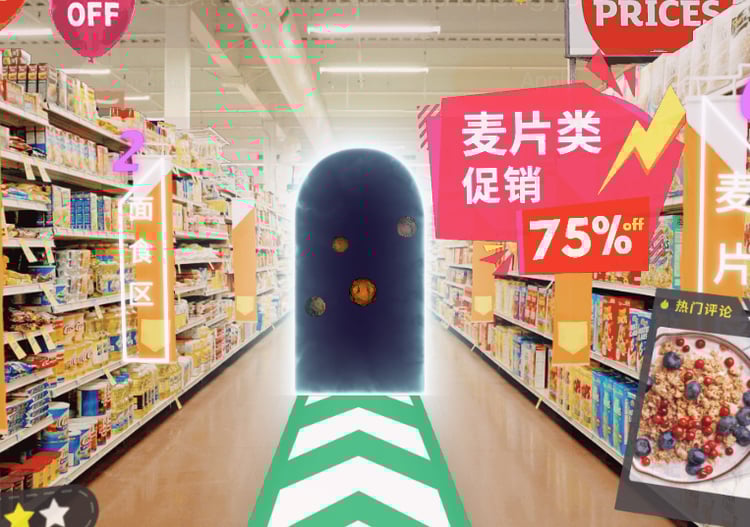
February 2020 saw Chinese startup Coolhobo unveiled Hobose – an AR-based tool that helps people understand whether food products meet their dietary needs and restrictions while shopping. Users input their dietary preferences in the app, which includes nutritional levels, additives tolerance levels and allergens to avoid. In the store, users then point their phone camera to food items on the shelves and Hobose will either show a green light if the food is good for them or red if it’s not, including the harmful ingredients it contains. Coolhobo is currently looking for retail partners to test out and integrate Hobose into the partner’s native app.
👍 INFORMAL INFO
The abundance of choice is often paralysing. Going to the grocery store is just one example of this. So many products! So much information! Coolhobo’s innovation translates people’s self-improvement goals into a simple, specific, practical datapoint. DnaNudge does the same via its genetic testing technology, while Kroger is employing in-store nutritionists to help people navigate the abundance of choice and information in its stores. Different spectrums of technology but satisfying the same basic needs nonetheless. It’s time to evaluate two things: First, could we actually serve our consumers better by giving them fewer choices or less information? Second, which capabilities could we leverage to help consumers in their decision making? Should we use data, sophisticated technology, or simply a warm, very human approach?
⛔ INTERVENTION SEEKERS
Of course the big caveat here is that consumers can still just ignore the advice! And typically they will (just witness these idiots 😬). If you want to really raise the bar when it comes to helping people do the right thing, we’ve witnessed bold brands take a proactive stance in enforcing good (i.e. healthy, sustainable) behavior: Mastercard stops consumers from spending upon hitting their carbon limit; Volvo plans a car that will pull itself over to avoid drunk driving, and Elan Languages offers a plug-in to avoid gender bias. 
OUT NOW | After the Virus