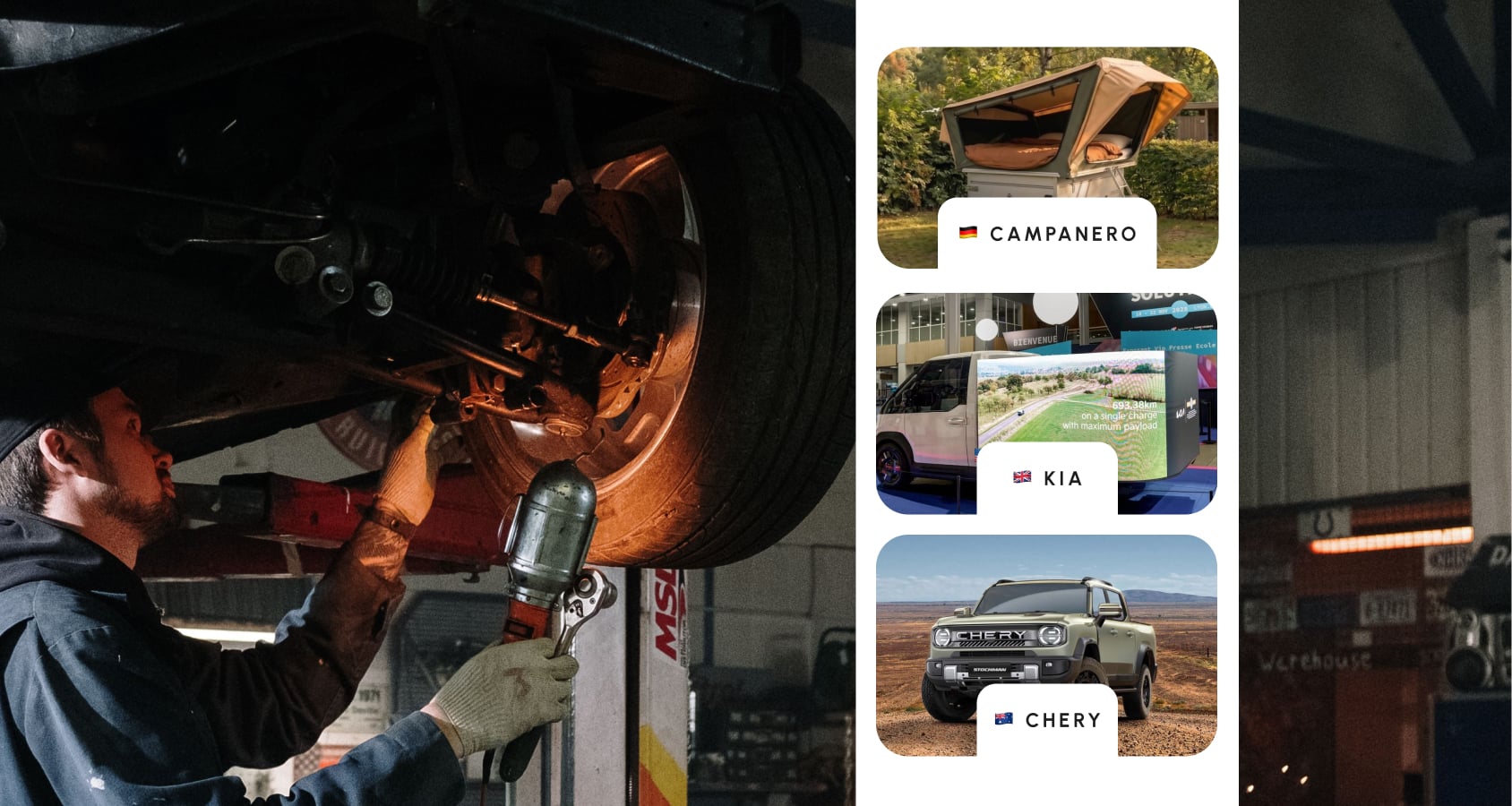
Vehicle makers are building flexibility into trailers, commercial vehicles and powertrains. Interchangeable living sections, adaptable chassis and hybrid systems allow one vehicle to accommodate changing space requirements, specialist uses or different driving conditions.
Dutch camper brand Campanero has designed a modular tent trailer with interchangeable living sections on one base chassis. Owners can unzip one section and replace it with another, choosing configurations for two, four or up to six people. This allows them to change the trailer’s capacity without replacing the whole vehicle.
Kia’s PV5 Chassis Cab is an electric commercial vehicle supplied with a cab and a rear chassis ready for conversion. It can accommodate bodies such as refrigerated boxes, mobile workshops and tippers, with conversions available through Kia and certified partners. The shared base allows businesses to choose a body suited to their work.
Chery’s forthcoming Stockman pickup for Australia combines a 2.5-litre turbo-diesel engine with a 34-kWh battery and an electric motor. Its indicative specifications list 96 km of electric range under the WLTC test cycle and a braked towing capacity of 3,495 kg. The plug-in hybrid system offers electric driving for shorter journeys alongside diesel operation for trips where charging may be less accessible.
Select your country
- Argentina
- Australia
- Austria
- Belgium
- Brazil
- Cambodia
- Canada
- Chile
- China
- Colombia
- Costa Rica
- Croatia
- Czechia
- Denmark
- Estonia
- Finland
- France
- Germany
- Ghana
- Greece
- Guatemala
- Hong Kong
- Hungary
- Iceland
- India
- Indonesia
- Ireland
- Israel
- Italy
- Japan
- Kenya
- Latvia
- Lithuania
- Malaysia
- Mexico
- Morocco
- Netherlands
- Nigeria
- Norway
- NZ
- Paraguay
- Phillippines
- Poland
- Portugal
- Puerto Rico
- Romania
- Serbia
- Singapore
- Slovakia
- Slovenia
- South Africa
- South Korea
- Spain
- Sweden
- Switzerland
- Taiwan
- Thailand
- Turkey
- UAE
- UK
- Ukraine
- US
- Uruguay
- Venezuela
- Vietnam
Select your country
- Argentina
- Australia
- Austria
- Belgium
- Brazil
- Cambodia
- Canada
- Chile
- China
- Colombia
- Costa Rica
- Croatia
- Czechia
- Denmark
- Estonia
- Finland
- France
- Germany
- Ghana
- Greece
- Guatemala
- Hong Kong
- Hungary
- Iceland
- India
- Indonesia
- Ireland
- Israel
- Italy
- Japan
- Kenya
- Latvia
- Lithuania
- Malaysia
- Mexico
- Morocco
- Netherlands
- Nigeria
- Norway
- NZ
- Paraguay
- Phillippines
- Poland
- Portugal
- Puerto Rico
- Romania
- Serbia
- Singapore
- Slovakia
- Slovenia
- South Africa
- South Korea
- Spain
- Sweden
- Switzerland
- Taiwan
- Thailand
- Turkey
- UAE
- UK
- Ukraine
- US
- Uruguay
- Venezuela
- Vietnam